"I got into an accident and was nervous about finding a personal injury attorney after hearing so many awful stories, but from the start, I felt confident with my choice in Kaplan Law, LLC." Read More - Ben
"Matt and Gillian took great care of me during a stressful time of my life. Very caring and knowledgeable group. I would definitely recommend Kaplan Law!" Read More - Kayleigh
"Incredible service and results! Matthew Kaplan and his paralegal Gillian did an amazing job for me. Not only did they resolve my case beyond my satisfaction, they also were very caring and supportive thru my recovery. I couldn't ask for a better attorney." Read More - Jamal
Matthew D. Kaplan

Late last month I summarized the key findings of a New York Times article on the latest gadgets available to Oregon drivers and designed to combat distracted driving. Products like this have become increasingly important since the Oregon distracted driving law went into effect in January. As a Portland distracted driving attorney I’ve worked hard to keep on top of both the technological and legal sides of this fast-developing area of the law.

As I noted last month, one barrier to effective high-tech solutions combating Portland distracted driving is what has become known as the “passenger problem”: if your anti-distracted driving app works mainly by disabling all or part of your phone while the car is in motion (as determined by the phone’s GPS), how does that effect someone who is riding in the car but is not behind the wheel? Cutting down on Portland injury car crashes linked to distracted driving is a priority for everyone – but it is also a reality of modern life that not everyone making calls or texting from a moving car is behind the wheel.

My earlier post noted that different products deal with this issue in different ways. I mentioned that one product, Zoomsafer, allowed users to bypass its call blocking functions by completing a timed puzzle – presumably one too difficult to attempt while driving. Shortly after publishing that blog, however, I received an email from ZoomSafer’s Marketing Manager, Eleanor Jones, which reads, in part:

“Users cannot bypass ZoomSafer’s software by successfully completing a timed puzzle. We believe that such a mechanism is incredibly dangerous as it encourages drivers determined to flout the block to completely disregard the road in order to regain access to their phones’ texting functions.”
The system, she writes, does have a “passenger mode” which, in effect, puts “the automatic speed detection on ‘snooze’.” This, frankly, is good news, if only because lack of some route around the passenger problem threatens to emerge as a major barrier to adoption of anti-distracted driving devices in Oregon and elsewhere around the country. We are probably still a year or so away from having good statistical data on the new Oregon distracted driving ban and its effectiveness, but high tech solutions designed to address user’s concerns while keeping them safe seem like a very good start.

Continue reading

As recently as last week officials at TriMet, metro Portland’s transit company, dismissed as impractical suggestions that the city should stop allowing busses to make left-hand turns. Criticism of the practice emerged in the wake of an April Portland fatal bus accident that left two people dead and three others injured after they were struck by a bus turning left through a crosswalk. The bus had a green light at the time, but the pedestrians also had a ‘walk’ signal, according to local media reports.

Since the accident it has emerged that federal safety data indicate that eliminating left turns from bus routes can have a significant effect on safety, as can other measures such as requiring drivers to honk their horns. An article in The Oregonian last week listed several cities in different parts of the country that have taken the study’s recommendations to heart, but noted that Portland is not among them. As recently as a few days ago Portland transit officials dismissed the idea of instituting similar changes here, claiming our city’s street grid makes such measures impractical.

Late last week, however, TriMet reversed itself. On Friday the authority announced that following last month’s Oregon bus injury crash changes are being made to routes 12, 17 and 44. According to an article in The Oregonian, “more operation, training and route changes are expected as part of a sweeping safety review.” The announcement follows the paper’s revelation that TriMet recently settled a Portland personal injury lawsuit with a woman who lost her leg in 2008 when she was struck by a bus making a left turn.

Last month, two people died and three others were injured in a Portland fatal bus accident when they were hit by a Tri-Met bus making a left-hand turn. Now, an investigation by The Oregonian demonstrates that data on the problem of busses and left-turn accidents has existed for some time, and that measures implemented in other cities could prevent Oregon bus accidents like the one that took place in late April.

The newspaper cites a federal study showing “that bus-pedestrian collisions are more than twice as likely to happen during left turns.” It notes that other cities, including Des Moines, Iowa and Cleveland, Ohio, instituted relatively simple procedures following the study’s release in an effort to improve safety. In both cities, for example, bus drivers are forbidden to make left-hand turns and are required to honk their horns before turning right. The article notes that six cities, including Cleveland and Richmond, Virginia, are equipping vehicles with “pedestrian warning systems”. In Richmond, for example, a loud recorded voice announces “Caution: bus turning” whenever the vehicle turns out of an intersection.

The newspaper quotes a Tri-Met spokeswoman, however, saying that a ‘no left turns’ policy for preventing Oregon bus accidents is not feasible in downtown Portland because of the way the city’s streets are laid out. The spokeswoman also dismissed the idea of a policy to require honking as busses turn on the grounds that it would make drivers rely on the horn “instead of their awareness of pedestrians.”

Oregon State Police are reportedly still investigating the circumstances of a three-car Oregon crash that took the life of a 72 year old woman from Roseburg last week. According to Eugene TV station KMTR, the Oregon fatal traffic accident took place near the intersection of Highway 42 and Carnes Road in the small town of Green, just west of I-5 between Medford and Eugene.

The Oregonian reports that 72-year old Nobu Cress was severely injured when her car was struck by a vehicle that ran a red light as she was turning left through the intersection. The vehicle that struck Cress also hit another car though the driver of that vehicle suffered only minor injuries. Cress was airlifted to a Portland area hospital, but later died, the newspaper reports. The driver of the car that struck her was treated at a hospital in Roseburg, closer to the accident site.

According to KMTR, “troopers have yet to release any information on what caused the crash, like a mechanical problem, medical problem or distraction,” though they did say that there is little evidence that the driver who ran the red light applied her brakes.

Two months ago I wrote about “Textecution”, a smartphone application available for phones using Google’s Android operating system. At the time I noted that the application’s approach – using a phone’s GPS capabilities to determine whether the user is in a moving vehicle and, if so, to turn off some or all of a handset’s functions – seemed to be the wave of the future.

Sure enough, barely eight weeks later, New York Times technology columnist David Pogue has published a detailed review of four similar applications, all of which seek to address the growing problem of distracted driving. Textecution was not among the applications reviewed this week by Pogue. All of the ones he did look at, however, take a similar approach.

As Pogue notes, iZup, tXtBlocker, CellSafety and ZoomSafer approach the problem of Oregon distracted driving in differing ways but seem to be aimed at the same market: parents of teenagers (or perhaps to bosses who fear that employees on the phone while using the company vehicle will cause an Oregon car accident leading to a lawsuit). Aside from ZoomSafer, all of the applications reviewed require a monthly subscription fee. Purchase prices range from free (for iZup, though, again, there is a monthly fee) to $25.

Relatives of an elderly Canby couple who died after their vacation home caught fire are seeking $3 million in damages as part of a Multnomah County wrongful death lawsuit, according to an article published earlier this week in The Oregonian.

The newspaper reports that the suit targets the companies that installed a propane stove and its accompanying gas lines in Clinton and Kenda Schultz’s vacation house in Sumpter, near Baker City in Eastern Oregon. The couple died in September 2008 when their cabin caught fire.

According to the newspaper, the suit alleges that the companies that installed the stove and its related piping failed “to obtain permits, notify building inspectors… or have the work inspected for its integrity. The suit claims that the Valley Metal employee who installed the stove and interior piping was 18 and didn’t have a required license from the Oregon State Fire Marshal.”

A Portland bus accident late Saturday night left two young women dead and three other people injured – one critically – after the group was struck by a bus. According to The Oregonian, police are still working to reconstruct the details of the Oregon fatal pedestrian vehicle crash. The incident took place in downtown Portland as the group of pedestrians left a local comedy club.

According to the paper, the accident occurred at the intersection of Northwest Broadway and Glisan Street. “The bus was westbound on Glisan as it turned left onto southbound Broadway and struck the westbound pedestrians,” the paper reported. The five victims, including a newlywed couple and a brother and sister, all knew one another and were traveling together. According to police, the bus had a green light at the time of the accident and the pedestrians had a walk signal. The bus was out of service at the time and was not carrying passengers.

The Oregonian quoted police saying that neither speed nor alcohol initially appears to be a factor in the accident.

Following up a story I blogged about earlier this month, the news broke late last week that an Oregon jury has awarded the victim $18.5 million in punitive damages in a high-profile Oregon child sexual abuse case involving the Boy Scouts, according to media reports. Earlier this month the Oregon jury awarded $1.4 million in compensatory damages for pain and suffering. The victim in this case, now 38, sued after determining that a scoutmaster had abused him in the 1980s.

As I’ve previously written, this case has attracted national attention. The New York Times noted that the case marked a rare instance in which the Boy Scouts’ confidential files on alleged sexual abuse and other inappropriate behavior by scout leaders were available to a jury. According to the Times: “Known variously as the “perversion files,” the “red flag files” and the “ineligible volunteer files,” the documents have been maintained for more than 70 years at the Scouts’ national office in Texas.” According to The Oregonian, the case marked only the second time that the records had been available to a jury.

Still to be decided by the judge is whether the files seen by the jury will now also be opened for public scrutiny. According to The Oregonian the Boy Scouts currently have about 2.8 million members, supervised by 1.1 million adult volunteers. The organization began running criminal background checks on volunteers in 2003, the paper reports. Numerous media reports have indicated that the precedent set by opening the Scouts’ files may unleash a flood of litigation nationwide.

An area man has received a national award for saving a neighbor from a vicious Oregon dog attack. According to a recent article in The Oregonian, Chuck Monnier of Molalla rescued 23 year old Christopher Friesen from a serious attack by two loose dogs early on Christmas morning 2008. He has now been honored with a Carnegie Medal, “one of 22 awarded across the country this year by the Carnegie Hero Fund,” the newspaper reports.

Monnier told The Oregonian he heard Friesen’s cries for help and began to call 911 before deciding the situation could not wait. Handing the telephone to his wife he rushed outside, grabbed a shovel and used it to drive the attacking Clackamas dogs away. The Oregon dog attack left Friesen with serious injuries to his head, left calf, the back of his right knee and his left arm.

According to the newspaper, the Molalla police located the dogs the following day. The animals were “placed in quarantine. After an investigation, the dogs were euthanized and their owner was cited for maintaining a dangerous dog.”

An Oregon wrongful death lawsuit has been filed in federal court in the wake of last year’s death of a 30 year old Salem man who had been subdued by police officers using tasers. The family of Gregory Rold is seeking $1.5 million in compensatory damages and $4.5 million in punitive damages from the City of Salem, four of its police officers and 10 other municipal employees, according to the Salem Statesman-Journal.

According to the Statesman-Journal, Rold died last May after being taken into custody by the Salem police following a trespassing complaint. When he resisted arrest, police subdued Rold with batons and the taser, according to the newspaper. Shortly after being taken into custody, however, Rold stopped breathing. Paramedics took him to a Salem hospital where he was pronounced dead. A Marion County Grand Jury later cleared the officers involved of wrongdoing, ruling that “police officers were justified in using physical force to arrest Rold,” the newspaper reported. A state medical examiner ruled the death accidental.

In an article distributed by Courthouse News Service, Rold’s mother says her son was schizophrenic, and that officers used the tasers on him for a full 2 minutes and later knelt on him as he lay face-down. According to the Statesman-Journal, the family’s Oregon wrongful death lawsuit “claims that Rold’s civil rights were violated, that police officers were negligent in causing Rold’s death and excessive force was used against Rold.”

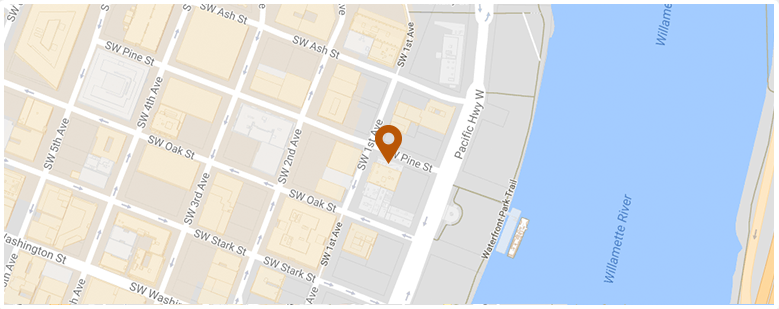
50 SW Pine St 3rd Floor Portland, OR 97204 Telephone: (503) 226-3844 Fax: (503) 943-6670 Email: matthew@mdkaplanlaw.com
map image