"I got into an accident and was nervous about finding a personal injury attorney after hearing so many awful stories, but from the start, I felt confident with my choice in Kaplan Law, LLC." Read More - Ben
"Matt and Gillian took great care of me during a stressful time of my life. Very caring and knowledgeable group. I would definitely recommend Kaplan Law!" Read More - Kayleigh
"Incredible service and results! Matthew Kaplan and his paralegal Gillian did an amazing job for me. Not only did they resolve my case beyond my satisfaction, they also were very caring and supportive thru my recovery. I couldn't ask for a better attorney." Read More - Jamal
Matthew D. Kaplan

Two children are dead and four people, including a child, injured following an Oregon car crash near Mt. Angel last weekend. According to the Salem Statesman-Journal the police are still investigating the circumstances of the accident, which took place at the intersection of Dominic and Meridian Roads in the town, which lies between Salem and Portland.

According to the newspaper, the Salem fatal car accident appears to have occurred when a Saturn traveling east on Dominic Road “was struck broadside by a 1998 Dodge Stratus traveling north on Meridian Road.” It noted that the intersection of Dominic and Meridian has stop signs in both directions.

Two boys, ages 9 and 12, who were traveling in the Saturn were pronounced dead at the scene of the accident while their father, the Saturn’s driver, was airlifted to a nearby hospital. Police said that “a Silverton couple and their 9-year-old daughter in the Stratus were also injured.” None of the injury victims’ exact medical status was available at the time the newspaper went to press. The newspaper reported that crisis counselors were being sent to the schools attended by the younger victims.

The issue of Oregon traumatic brain injuries and sports has been covered in this space on a number of previous occasions. I have noted in the past that while Portland is not an NHL city, the increased attention being paid to head injuries and concussions in the hockey world merits our attention.

Last spring I wrote about the serious concussion suffered by Boston Bruins forward Marc Savard in a game against the Pittsburgh Penguins. Savard, one of the team’s stars, was knocked unconscious by a check to the head and taken off the ice on a stretcher. He returned briefly during the playoffs about two months later but was clearly far from 100% and was placed back on the disabled list soon afterward. Partly because of the injury to Savard (one of several especially serious head injuries in the latter part of last season) the league revised its rules on hits to the head before the current season began in October.

Savard himself missed the first two months of the current season. After playing well over the last six weeks, however, he is once again spending time with doctors, rather than on the ice in the wake of yet another blow to the head and yet another possible concussion in a game against Colorado last week, according to the Boston Globe.

A case headed for California’s courts offers a pointed reminder that there is more to ‘distracted driving’ than cellphones. According to the Orange County Register, a man in southern California has been charged with vehicular manslaughter for causing a baby’s death because he “was distracted by a laptop sliding off his passenger seat.” In California the charge of “vehicular manslaughter without gross negligence” caries a potential sentence of a year in jail.

According to the paper, the fatal car accident took place last September. It began when the driver, as he crossed some railroad tracks, turned his attention to a laptop sitting in the passenger seat that he feared would slide out of its bag. As a result, he “did not notice that the traffic in front of him had stopped” and rear-ended the vehicle in front of him. That vehicle, in turn, lurched forward, striking an Australian tourist who was making her way across a crosswalk with her baby in a stroller as well as her 11-year-old niece and 7-year-old nephew.

The woman and the 11 year old were struck and injured by the car at the head of the chain-reaction accident. The baby was launched from her stroller, landing “approximately 70 feet away,” the newspaper reports.

An article published in the New York Times this week indicates that cell carriers are now looking at technologies designed to prevent distracted driving. The technology is not new per se (see this blog post, and this one from last spring); what is changing is its embrace by the companies we buy cell service from. The Times notes that this may be happening, in part, because fewer and few customers pay for their calls by the minute any more. For cell carriers margins are now found, instead, in applications and other value-added services.

Call-blocking technology usually works to prevent distracted driving here in Oregon and elsewhere by linking a piece of software to a phone’s GPS function. When the software detects the phone being in motion it automatically sends all incoming calls to voice mail and texts to an archive. In some extreme versions it simply disables the phone entirely.

The technology has an obvious appeal to parents worried about teens falling victim to distracted driving while behind the wheel. There is also, the newspaper indicates, quoting a T-Mobile spokesperson, a segment of the adult population “who know they get distracted while driving and feel responsible enough to themselves that they want help.” Designers have been working to overcome potential barriers to use: notably ways for the phone to remain usable when its owner is a passenger rather than a driver, and for other applications, such as GPS-enabled directions to remain functional.

A dramatic Oregon car accident near Redmond landed a 25-year-old Prineville woman in prison on suspicion of Oregon drunk driving, according to the Bend Bulletin.

The newspaper reports that Deneice Tebbits “was driving south a few miles south of Redmond shortly before 7 a.m. (last Wednesday) when she attempted to pass a line of cars and spun out of control, crossed three lanes of traffic, and struck a northbound vehicle.” According to MyCentralOregon.com neither Tebbits nor the driver of the car she hit were injured, but Tebbits was arrested at the scene and charged with suspicion of Oregon DUII.

If there were ever a case that illustrates the many dangers of Oregon drunk driving this has to be it. Based on media reporting of the case, we allegedly have an impaired driver (at seven o’clock in the morning!) endangering both herself and a significant other number of motorists.

A local fire department official had to be rescued by his own colleagues after causing an Oregon injury car wreck near Walterville, the Eugene Register-Guard reports. The Oregon car accident took place on Highway 126 last Sunday and resulted in three injuries, one of which was described as “serious” in media reports.

The newspaper, quoting witnesses and the local police, reported that a Toyota driven by Michael McCall was “weaving in and out of its lane and traveling in the opposing lane before it crashed into an oncoming Ford Taurus occupied by two Eugene residents.”

McCall, described as “a volunteer lieutenant with McKenzie Fire & Rescue” had to be rescued from the wreck by his fire department colleagues. He was transported to a hospital in Springfield and treated for serious injuries following the Oregon head-on collision. The driver and passenger in the Taurus were transported to a different Springfield hospital with injuries that were described as non-life threatening.

A study released last week by the federal government’s Centers for Disease Control & Prevention ranked Oregon first among states in seat belt use, according to a report in the Los Angeles Times. According to the CDC an admirable 94% of Oregonians said they always wear seat belts. California came a close second in the survey at 93.2% while Washington was third at 92% (in case you are wondering, North Dakota came in last at 59.2%). These figures compare with a national average of 85%, according to the CDC.

The results testify to the effectiveness of seat belt laws here in Oregon and elsewhere on the West Coast, and serve as a reminder of the importance of responsible driving habits. Seat belt use is required by law in every state except New Hampshire (48th on the seat belt use table – ahead of only the two Dakotas).

As the CDC’s Director, Dr. Thomas Frieden, noted in a statement announcing the study findings, “1 in 7 adults do not wear a seat belt on every trip. If everyone in the vehicle buckled up every time, we could further reduce one of the leading causes of death.”

Two serious Portland pedestrian accidents only hours apart – one of them fatal – highlight the danger pedestrians continue to face here in northern Oregon, despite a renewed public focus on the issue in recent months.

The first accident took place last Monday on Southeast 82nd Avenue where a 27-year old pedestrian was hit by a car and run over by not one but two vehicles, according to a report in The Oregonian. The victim is hospitalized in serious condition. According to an OSP spokesperson, the Oregon pedestrian car accident began when she was struck while crossing 82nd Avenue in a marked crosswalk Monday afternoon. A pick-up truck traveling behind the car that hit the pedestrian ran over her as it attempted to drive around the first car. The driver of the first car, apparently startled, then moved her vehicle – in the process running over the victim a second time. Neither driver was cited in the incident, according to The Oregonian, but an investigation is still under way.

The second Portland car accident took place Tuesday evening. Unlike the first accident, where both drivers are cooperating with police, this was a hit-and-run, and a reward is being offered for information leading to the arrest of the driver, according to The Oregonian. The accident, on Southeast Division St, led to the death of a pedestrian who was struck “as he crossed the wide road”, the newspaper reports. The victim was pronounced dead at the scene.

New Year’s Eve and the days leading up to it are always among the most dangerous times to be on the road be it here in Oregon or elsewhere in the country. This year was no exception. According to the Salem Statesman-Journal one death and a serious injury resulted from an Oregon truck crash near McMinnville in the hours before the New Years festivities kicked off.

According to the newspaper the wreck took place in the early hours of December 30 when a car “crossed the centerline and collided with a semi hauling a tanker trailer in the other direction” on Highway 18 northeast of McMinnville. As a result of the accident and subsequent investigations the highway was closed for most of the day, the paper reported.

Attempts by the semi to avoid a Central Oregon truck crash with the car, a Hyundai, caused another semi to be involved in the crash. As it rolled off of Highway 18’s eastbound lane the first semi also caught fire. According to the Statesman-Journal, neither of the truck drivers was injured. A passenger in the Hyundai, however, died of his injuries shortly after being transported to a local hospital. The Hyundai’s driver was hospitalized with what police described as serious injuries.

Senator Tom Udall (D-New Mexico) is making headlines this week as the man leading efforts by Senate Democrats to reform rules governing filibusters. As the New Year begins he also, however, is emerging as the congressional point person for a very different issue: traumatic brain injuries, specifically those sustained while playing football.

According to The New York Times, Udall is calling on the Federal Trade Commission to “investigate what he called “misleading safety claims and deceptive practices” among helmet manufacturers and refurbishers.”

As I noted in this post last fall, safety standards for football helmets have not changed meaningfully since the early 1970s. The Times article notes that Udall “took specific aim at Riddell, the official helmet manufacturer of the N.F.L., for its prominent claim that its popular Revolution models decrease concussion risk by 31 percent.” Udall contends that the testing standards used to evaluate helmets – along with much of the advertising based on those tests – are misleading. A spokesman for the company told the Times that Riddell welcomes the scrutiny, but hopes other helmet manufacturers will be subjected to it as well.

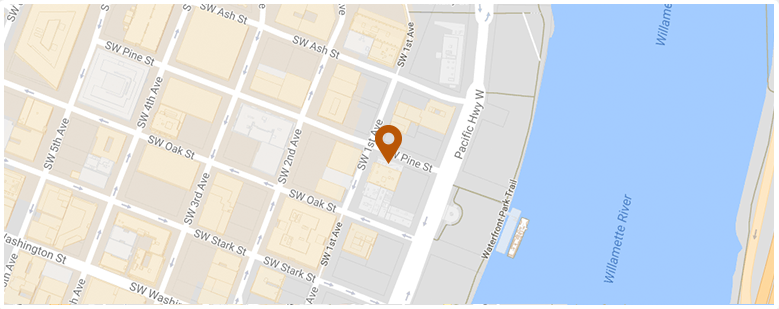
50 SW Pine St 3rd Floor Portland, OR 97204 Telephone: (503) 226-3844 Fax: (503) 943-6670 Email: matthew@mdkaplanlaw.com
map image
Contact Information