"I got into an accident and was nervous about finding a personal injury attorney after hearing so many awful stories, but from the start, I felt confident with my choice in Kaplan Law, LLC." Read More - Ben
"Matt and Gillian took great care of me during a stressful time of my life. Very caring and knowledgeable group. I would definitely recommend Kaplan Law!" Read More - Kayleigh
"Incredible service and results! Matthew Kaplan and his paralegal Gillian did an amazing job for me. Not only did they resolve my case beyond my satisfaction, they also were very caring and supportive thru my recovery. I couldn't ask for a better attorney." Read More - Jamal
Matthew D. Kaplan

A terrible story from California this week reminds all of us that distracted driving laws – be they here in Oregon or elsewhere – cannot, by themselves, stop some people from behaving destructively. To be effective, the laws require enforcement by police and the accountability provided by courts.

According to a report by the Los Angeles TV station KTLA, a 20-year-old Glendale woman now faces vehicular manslaughter charges “after allegedly running a stop sign and killing an elderly pedestrian while texting on her cell-phone.” The station reports that the pedestrian, an 80-year-old man, was thrown into the air and died of the head trauma suffered as he landed on the sidewalk. The accident took place in September. Police arrested the driver a few days ago after concluding a three-month investigation.

California’s laws on cellphone use by drivers are similar to Oregon’s (in some respects they are actually stronger: California explicitly bans cellphone use by school bus drivers in all circumstances, a provision the Oregon distracted driving law omits). Like California, the Oregon distracted driving law also allows for “primary” enforcement, meaning that offenders can be pulled over solely for breaking the ban on using a handheld phone or texting while driving. The question we have to ask is how often this actually happens (texting, in particular, is relatively easy to hide by simply holding the phone low enough that it is difficult or impossible for an officer glancing through the driver’s window to see).

The City of Portland is scheduled, this week, to pay out $338,477 as part of the settlement of a lawsuit filed by an 80-year-old woman struck by a police car while crossing the street. According to an article in The Oregonian, the accident took place when the officer driving the patrol car looked away from the road to check his onboard mobile computer for messages from the police dispatcher.

The accident is a reminder of one of the loopholes in the much-talked-about Oregon distracted driving law, which went into effect nearly a year ago: the blanket exemption for on-duty law enforcement and public safety personnel. Obviously police, firefighters, EMTs and other people who protect our lives deserve our respect and support. Equally obviously, their use of computers and other on-board electronic equipment designed to help them do their jobs is a far cry from a commuter texting in downtown traffic.

That said, the suit the city has just settled is a reminder that the on-board computers that are now standard in police cars and other public service vehicles are far more complex – and potentially far more distracting – than the hand-held two-way radios of old. As The Oregonian rightly notes, “The case points to a growing tension: While police are expected to use increasing technology in the field t obtain information quicker, the distractions also have the potential to cause accidents.”

A newly released government study examining hospitalizations resulting from dog bites lays out some attention-grabbing data: between 1993 and 2008 the number of people hospitalized nationwide as a result of dog bites nearly doubled. Reporting the data the New York Times noted that this “increase vastly exceeded population growth, and pet ownership increased only slightly during the same period.” The study was conducted by the Agency for Healthcare Research and Quality, a unit of the Department of Health and Human Services.

As an AHRQ news release notes, those under the age of 5 or over 65 are in the greatest danger for dog bites. The most common form of hospital treatment required is for “skin and underlying tissue infection”, though in a small number of cases much more serious conditions – such as multiple fractures or blood poisoning – can develop following a serious dog attack.

The study notes that around 4.5 million people are bitten by dogs each year and that only a fraction of these incidents require hospitalization. Still, as the study’s author, Dr. Anne Elixhauser, told the Times, referencing the huge increase in injuries serious enough to require hospitalization: “It’s really kind of frightening, and, unfortunately, we’re at a loss to explain it.”

Nine months after an explosion in a West Virginia coal mine left 29 mine worker dead, the Wall Street Journal reports that many families torn apart by the tragedy remain unsure of their next legal steps forward. Their stories contain many lessons for Oregon families thrown into similarly tragic circumstances as the result of an Oregon wrongful death or industrial accident.

As the paper reports, within days of the mine explosion the board of Massey Energy Company, one of the largest and most powerful companies in West Virginia, offered each family a settlement: $3 million in compensation for the death, lost wages and lost companionship of their loved-one, in exchange for giving up any right to sue the company. The Journal reports that, at present, only seven families have agreed to the company’s settlement, and that “in at least two cases family members are at odds and plan to let a court decide which path they should take.”

For the families the choice is a painful one. As the Journal quotes one victim’s father, himself a miner, saying: “I don’t think it’s justifiable that they want to put a dollar sign on my boy.” As the article notes, the families of workers involved in other industrial accidents often face similarly agonizing choices.

A scathing statement released Tuesday by the National Transportation Safety Board cites “a series of improper actions” by a Grant’s Pass, Oregon contractor leading up to a 2008 crash that killed nine firefighters in California. According to a report in The Oregonian, the NTSB’s chairwoman found some actions by the company, Carson Helicopters, “so distressing that the NTSB has alerted the Department of Transportation’s inspector general to investigate in more detail, looking for possible criminal wrongdoing.”

The NTSB statement (see link below) paints a devastating picture of corporate negligence and deception. Referring to Carson, whose helicopters were contracted out to the US Forest Service for firefighting purposes, the NTSB writes: “The contractor’s actions included the intentional alteration of weight documents and performance charts and the use of unapproved performance calculations.”

Though the NTSB also found fault with actions by both the Forest Service and the Federal Aviation Administration, “Carson’s actions were so egregious – so egregious – that they have to go first,” NTSB member Robert Sumwalt told The Oregonian.

With recent statistical reports demonstrating that elder abuse is a rising problem here in the United States, media reports here in Oregon indicate that officials at the state Department of Human Services fear our state may have become part of this disturbing trend.

According to a recent article published in The Daily Astorian, “national studies estimate 3 to 5 million seniors, aged 65 and older, have experienced abuse – but only 1 in 5 cases are reported.” Adult Protective Services agents are asking family members to keep an eye out for signs of trouble, particularly as we enter the holiday season.

Elder Abuse can take many forms, and need not be physical in nature. As an information page at the Oregon Department of Human Services’ website (see link below) outlines, Oregon elder abuse can take many forms. These may involve Oregon medical malpractice or nursing home neglect, but can also include financial exploitation or psychological and emotional trauma.

A post-holiday news release from the Oregon State Police notes that the state recorded three Oregon fatal car crashes over the just-concluded Thanksgiving holiday weekend. The statement notes that this represents an increase over the same period during the last two years. Only two people died on Oregon’s roads over the 2009 Thanksgiving weekend, an identical figure to 2008. The statement noted, however, that the number of Oregon car crashes troopers responded to skyrocketed this year: “troopers reported responding to over 300 traffic crashes, nearly 2-1/2 times the number reported during last year’s Thanksgiving holiday period,” the statement said.

The statement noted that icy road conditions, particularly in Eastern Oregon, were a factor in all three of the state’s fatal holiday weekend accidents. The unusually high number of non-fatal crashes, however, are a special cause for concern as the vast majority of them cannot be attributed to bad weather.

In Gearhart, for example, a 21-year-old driver was cited by police on Thanksgiving Day for his role in a two-car accident that left one person seriously enough injured to require medical evacuation to Portland.

The death of a young Corvallis man on Thanksgiving Day as the result of an Oregon motor vehicle accident involving an armored car was a sad reminder of the dangers of driving on holiday weekends and has left a number of legal questions potentially unresolved.

Joseph Michael Pablo was riding in the back of an armored car early on the morning before Thanksgiving when the vehicle’s driver lost control, according to reports in the Corvallis Gazette-Times and the Salem Statesman-Journal. The accident took place off Highway 99W near Monmouth, southwest of Salem. The Gazette-Times reports that Pablo’s armored “truck was headed south and veered off the right side of the road, hit a tree and rolled several times before coming to rest on its roof.”

Pablo had been riding in the back of the truck as part of his job as a guard working for the company operating the vehicle. Pablo was transported to an area hospital in critical condition and died of his injuries the following day. The truck’s driver at the time of the Oregon fatal truck accident was not seriously injured and did not require hospitalization. He was cited for Oregon careless driving, according to the Gazette-Times.

Back in August I wrote about the dangers posed to children by ATVs, and the effort in Massachusetts to cut the number of deaths and injuries to young riders through a new law banning ATV use by kids 14 and younger. Now we have even more evidence of the need for such laws, and the need for accountability among ATV manufacturers.

According to a recent article in the trade publication The Safety Record, a new study conducted by Johns Hopkins University’s Center for Injury Research and Policy looks at ATV-related hospitalizations and injuries to children between 1997 and 2006. The study found a huge spike in both categories among children during that time period. The numbers are particularly noteworthy because, as The Safety Record notes, it was during this time that a 10-year consent agreement between the Consumer Product Safety Commission and ATV manufacturers expired. Under that agreement, reached in 1988, the manufacturers offered “free training for riders, warning labels, a public education campaign and a ban on three-wheeled ATVs,” the publication notes. Once the agreement expired some manufacturers continued to honor it voluntarily, but others did not.

During the 1997-2006 period, the study found, ATV-related injuries to children (defined as 17 years old or younger) increased by 150 percent overall. Some sub-groups showed even more alarming jumps: notably 15-17 year old boys, among whom injuries increased by 260 percent. “All-Terrain vehicles are inherently dangerous to children,” the report quotes Dr. Stephen Bowman, a Johns Hopkins professor and the study’s lead author, saying.

A pick-up truck running a stop sign caused an Oregon two-car crash that left one dead and ten injured, according to a report at MyCentralOregon.com. The crash took place on Highway 361 near Culver, in Central Oregon and was serious enough to require mobilizing troopers from two separate OSP barracks as well as the Jefferson County Sheriff’s office along with emergency medical personnel from both Jefferson County and Warm Springs.

According to the website, the accident took place when a pick-up driven by 28-year-old Andrea Orozco of Madras ran a stop sign and collided with a Toyota driven by Linda Ross, 61, of Metolius. The site reports: “The impact caused the Toyota to travel west where it came to rest off the highway. (Orozco’s) Ford Expedition traveled travelled northwest and overturned before coming to rest on its side.”

A passenger in Ross’ Toyota died from injuries sustained in the Oregon car crash several hours after the accident, while Ross herself was hospitalized with what the website report describes as “serious injuries”. Orozco was carrying eight passengers – two adults and six children ages 2 to 14. She and all of her passengers were transported to area hospitals with what were also described as “serious injuries”.

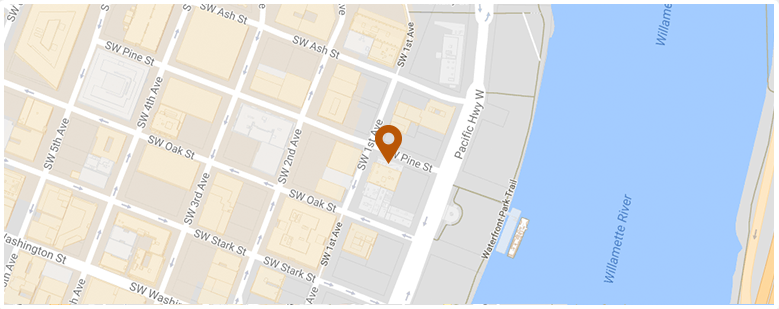
50 SW Pine St 3rd Floor Portland, OR 97204 Telephone: (503) 226-3844 Fax: (503) 943-6670 Email: matthew@mdkaplanlaw.com
map image