"I got into an accident and was nervous about finding a personal injury attorney after hearing so many awful stories, but from the start, I felt confident with my choice in Kaplan Law, LLC." Read More - Ben
"Matt and Gillian took great care of me during a stressful time of my life. Very caring and knowledgeable group. I would definitely recommend Kaplan Law!" Read More - Kayleigh
"Incredible service and results! Matthew Kaplan and his paralegal Gillian did an amazing job for me. Not only did they resolve my case beyond my satisfaction, they also were very caring and supportive thru my recovery. I couldn't ask for a better attorney." Read More - Jamal
Matthew D. Kaplan

A surprising – and heartening – article in the sports section of the New York Times last week revealed that heightened awareness of the serious nature of sports-related concussions and other traumatic brain injuries has turned up in an unexpected forum: video games.

The paper reports that “Madden NFL 12, the coming version of the eerily true-to-life NFL video game played by millions of gamers, will be realistic enough not only to show players receiving concussions, but also to show any player who sustains one being sidelined for the rest of the game – no exceptions.”

Considering the extent of the criticism being weathered by the real-life NFL over head injury issues and the long term health of the league’s players, this development can only be called striking. The article quotes John Madden himself saying that the change in the game’s format was driven partly by the desire for ever-greater realism, but also from a belief that children need to understand how serious a matter concussions can be. “We want that message to be strong,” Madden told the Times.
Oregonians could learn some lessons about the dangers of drunk driving accidents from an incident unfolding to our south, in Northern California.

A 64-year-old retired La Selva Beach man is facing serious charges after what media reports describe as a classic drunk driving hit-and-run accident. The Santa Cruz Sentinel, quoting police sources, says the alleged perpetrator “was driving a 2006 Camry south on State Park Drive approaching the Highway 1 off ramp just before 2 p.m.” last Sunday when he hit a 12-year-old boy in a crosswalk.

The paper reports that the driver fled, but witnesses at the scene “helped identify him” leading to his arrest just over an hour later. The good news is that the child does not appear to have been seriously injured.

A Florida judge has issued a key ruling in a closely watched wrongful death case that may have implications for student athletes here in Oregon and elsewhere.

The case concerns the death of Ereck Plancher, a 19-year-old student and football player at the University of Central Florida. Plancher died in March 2008 after collapsing during a spring workout that was being supervised by the university football coach. According to the Orlando Sentinel “an autopsy found that the stress of the workout triggered Plancher’s sickle cell trait, causing misshapen blood cells to damage his organs and shut down his body.”

Though the university “contends it did everything possible to save his life,” Plancher’s parents filed a wrongful death lawsuit against the school, its trustees and the UCF Athletics Association. Last week’s ruling allowed the parents to seek punitive damages in the case, but instructed the jury only to award such damages if the jurors “specifically find that no water and no athletic trainers were present for the final portion of Palncher’s workout.”

In terms of violence and physical contact baseball is a far cry from football or hockey, but today’s news brought word that the National Pastime is following in the footsteps of higher-impact competitions in seeking to address concussions and other traumatic brain injuries.

According to an analysis published by Bloomberg News, Baseball Commissioner Bud Selig has announced new procedures for dealing with head injuries in baseball. The measures, which take effect on Thursday when the 2011 season officially begins, include changes to the manner in which “concussions are diagnosed and the determination on when players or umpires can return to the field.”

The news agency notes that each team will be required to designate a brain injury specialist as part of the medical team based in its home city. It also establishes a new, head-injury-specific seven day disabled list and establishes consistent “protocols for evaluating players for a possible concussion after high-risk incidents, such as being hit in the head by a pitched, batted or thrown ball, or colliding with another player or fixed object.”

A trial now underway in Washington is raising serious questions about railway safety. According to TV station KGW, the Longview, Washington trial focuses not only on safety policies at the Burlington Northern Santa Fe Railway Company, but on how carefully those policies are enforced.

The Washington rail crash trial stems from “a collision between a train and a shuttle van in which three people were killed and a forth was critically injured,” the station reports. At issue is a BNSF policy of parking all stationary trains at least 250 feet from a rail crossing. The victims in this particular case died after being struck by a train that apparently could not see their van as it crossed the tracks because another train was parked only 50 feet from the crossing, blocking the engineer’s view.

One complication facing the victims’ families, however, is the fact that the incident took place on the railway company’s property, where laws designed to protect the public at public crossings do not have effect. Private crossings, such as those on company property, have “no requirements for lights or a crossing arm,” the paper reports.

A Portland man faces the serious charge of second-degree assault after an alleged attack on a Portland bike rider that resulted in an Oregon bicycle accident, according to The Oregonian.

The incident took place early Tuesday morning as Joe Santos, a Portland police sergeant, was riding his bike to work along Northwest Cornell Road. Santos told investigating officers after the incident that an SUV nearly hit him, then, inexplicably, “about a block later, the driver stopped so suddenly that Santos had to veer into oncoming traffic.” Santos “slapped” the SUV to try to alert it to his presence, and was rewarded with the car abruptly stopping, going into reverse and trying to hit him. When Santos tried go grab his bike and flee to the safety of the sidewalk the SUV allegedly went after him yet again – hitting the bike, but missing the rider.

Fortunately Santos, though shaken, was able to get the license plate of the SUV. Later that day police took a suspect into custody, the newspaper reports, citing police sources.

The state department of transportation plans to address issues raised by the death of a cyclist in a Portland bicycle accident last December on a notoriously dangerous stretch of SW Barbur in Southwest Portland.

As I noted in a post last December, the issue most recently came to public attention with the death of 26-year-old Angela Burke. Burke was struck by an allegedly drunk and stoned driver as she rode along a section of SW Barbur that is notorious among local cyclists as one of the scarier stretches of road in Greater Portland. According to media reports at the time the driver who hit Burke was traveling at approximately 75 mph in a 35 mph zone.

According to Bike Portland, the ODOT plans to install four beacons along the most dangerous stretch of road: the crossing points near the Rasmussen apartments where a crosswalk straddles the road very close to a potentially dangerous bend. The website quotes an ODOT spokesman who notes that “the speed of the vehicles and the curve” make the crossing “a real challenge.”

An Oregon truck accident on Interstate 84 closed the road for several hours last week and sent two people to the hospital, though its most notable feature may have been that it was not even worse than accident reports indicate.

According to the Associated Press the Oregon semi-truck accident began when a driver fell asleep at the wheel around 1 am while traveling west on I-84. The news agency reports that the truck then “rear-ended a tow truck with a car in tow” on the dark road.

The truck driver and the owner of the car (who was riding in the tow truck) required hospitalization following the accident. The driver of the tow truck was not injured. According to the AP, the driver of the semi received a citation for “careless driving.”

A report released this week by the consumer watchdog organization Public Citizen raises serious questions about the conduct of state medical boards, according to an analysis published by the Los Angeles Times. The charges, in turn, raise broader questions about the conduct of hospitals and doctors and the prevalence in our health care system of doctors who are problematic at best. Here in Oregon it must make conscientious citizens wonder whether instances of medical malpractice or even wrongful deaths have been allowed to occur as a result of insufficient professional oversight.

As outlined by Public Citizen on the group’s website (see link below) the study examined 20 years of data (1990-2009) regarding doctors who have had “one or more clinical privilege actions,” meaning that they have had some or all of their hospital or emergency privileges withdrawn because of misconduct, incompetence or some other professional infraction. It then compared these numbers with the numbers of physicians sanctioned over the same period by state medical boards. The analysis yields a shocking result: nationwide, 55% of doctors disciplined by their hospitals suffered no further punishment from their state licensing board.

When thinking about the possible implications of this information for Oregon medical malpractice we can take some comfort from the fact that our state had one of the better records on this score. In Oregon, 41.48% of doctors who had some or all of their hospital privileges revoked over the study period suffered no state-imposed sanction. That number is obviously far too high, though it is better than what one finds in most other states (for comparative purposes: Colorado had the lowest rate of unsanctioned doctors at 31.63%; Hawaii was worst with a truly shocking 77.08%).

An important article published in the New York Times last week indicates that the manufacturers of football helmets are moving to address problems in the way their products are used – a move that could benefit many young athletes in a time when traumatic brain injuries stemming from football and other rough sports are an issue of increasing concern.

According to the newspaper, “the National Athletic Equipment Reconditioners Association (Naera) announced (last) Thursday that is would no longer accept helmets more than 10 years old.” As the paper notes, many schools regularly send football helmets in for reconditioning, but concerns have been rising that as the products age it can become difficult if not impossible to bring the gear back to a point where it meets appropriate safety standards. Under current standards, the paper notes, so long as the equipment met applicable safety standards when it was new “helmets of any age and condition can be worn, despite concerns over how the stiffening of foam and the degrading of the polycarbonate shell can leave a player more susceptible to concussions.”

Though the article does not say this, it appears that football helmet manufacturers and reconditioners may be taking a cue from the ski industry. For several decades the manufacturers of ski bindings have indemnified their products for a finite period of years (usually 10 or 12). Once that period expires, skiers quickly discover that few ski techs will agree to make even minor adjustments to the bindings. A cynic might say the companies are forcing skiers to purchase new equipment on a regular basis, but the policy also ensures that the vast majority of skiers are using relatively up-to-date equipment – an important consideration in such a potentially dangerous sport.

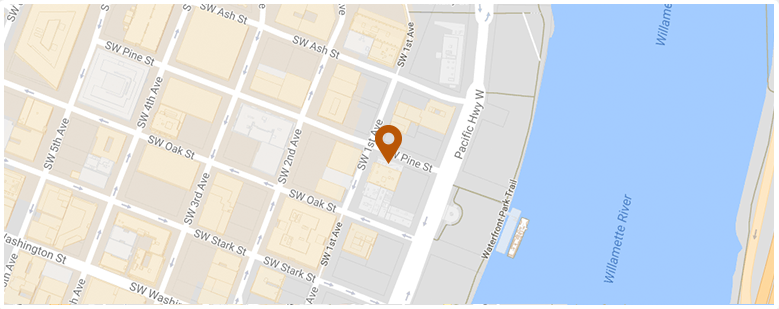
50 SW Pine St 3rd Floor Portland, OR 97204 Telephone: (503) 226-3844 Fax: (503) 943-6670 Email: matthew@mdkaplanlaw.com
map image
Contact Information