"I got into an accident and was nervous about finding a personal injury attorney after hearing so many awful stories, but from the start, I felt confident with my choice in Kaplan Law, LLC." Read More - Ben
"Matt and Gillian took great care of me during a stressful time of my life. Very caring and knowledgeable group. I would definitely recommend Kaplan Law!" Read More - Kayleigh
"Incredible service and results! Matthew Kaplan and his paralegal Gillian did an amazing job for me. Not only did they resolve my case beyond my satisfaction, they also were very caring and supportive thru my recovery. I couldn't ask for a better attorney." Read More - Jamal
Matthew D. Kaplan

The tragic death last year of two teenage girls in a semi-truck accident has spurred an online petition drive organized by their family, and an advocacy movement for tighter regulation of large trucks.

“Their lives were abruptly ended and we want to see that same thing does not happen to others,” the girls’ mother said, according to Washington DC TV station WJLA, as she delivered a petition with over 11,000 signatures on it to the Department of Transportation earlier this month. The North Carolina family was driving down an interstate highway a year ago when “their family vehicle was struck, propelling it under a tractor trailer and killing the two girls,” the TV station reports.

In response, the grieving parents organized an online petition drive seeking tighter regulation of the trucking industry (you can see, and sign, the petition here). Specifically, the couple is calling for “improved under-ride guards to prevent vehicles from sliding under trucks, and also wants to require electric monitoring devices to decrease the number of truckers driving while fatigued. They also want to increase the minimum liability insurance required for drivers,” according to WJLA. The girls’ father told reporters that installing the under-guards would cost only $20 per truck.

It is no secret that Portland has a reputation as one of America’s most bike-friendly cities, but the census bureau now has the data to prove it. According to a recent article in The Oregonian, since 2000 biking to work “has shown the largest percentage increase among all commuting modes” nationally. Portland leads the way with a significantly higher percentage of bicycle commuters than the national average.

Nationally about 786,000 people get to work using bicycles, according to the paper, up from 488,000 in 2000 (the data is for 2012, the latest year available). That’s only about one percent of commuters nationwide, but “within the Portland city limits the number has nearly tripled since the 2000 census… In fact, Portland leads all large cities with a bicycle commuting rate of 6.1 percent.”

According to the newspaper, local activists welcomed the news, but also warned about “complacency.” The head of the Bicycle Transportation Alliance called for “bolder steps” by the city to prevent Portland bicycle accidents so that commuters will feel safer. The article specifically cites initiatives to create “buffered bike lanes” – a move which often requires the removal of parking spots or one auto lane along busy streets that double as important bike commuter routes. It also cites “a long-delayed $4 million bike sharing system, which still lacks a sponsor.” Once implemented, the bike share program is also expected to increase bike commuter numbers. The Oregonian concludes by noting that “Portland’s strategic bike plan calls for 25 percent of all trips in the city to be made on a bike by 2030.”

A story posted this week by Atlanta television station WSB has a surprising – and good – connection to Portland. The station announced that it is sending one of its anchors to Portland to examine Tri-Met’s streetcar system “to learn how (Portland) handles streetcar safety.”

According to the report, tests of a new streetcar system in Atlanta may begin as early as this month but Atlanta “streetcar leaders told (WSB) a public awareness campaign is needed to avoid hundreds of accidents or even deaths.” The announcement followed word of a streetcar-related death in Philadelphia last week, according to WSB. Atlanta is a city that has long had a reputation for skepticism regarding public transportation. Though many Portlanders sometimes have an up-and-down relationship with Tri-Met, it is good to be reminded of the fact that Portland has long been one of the country’s leaders in green energy and innovative public transportation.

The article notes that Portland’s streetcar system, at 14.7 miles, is far more extensive than what Atlanta soon plans to launch The Georgia system will initially involve only 2.7 miles of track, according to WSB.

An announcement last week by New York’s University of Rochester received little attention in the national media, but deserves more. According to a news release from the university’s medical center, researchers there have made a significant breakthrough in the study of sports-related traumatic brain injuries, especially to children.

The medical center says the development of a new testing model “provides a foundation for scientists to better understand and potentially develop new ways to detect and prevent the repetitive sports injuries that can lead to the condition known as chronic traumatic encephalopathy (CTE).” The key to the research is the discovery “that mice with mild, repetitive traumatic brain injury (TBI) develop many of the same behavioral problems, such as difficulty sleeping, memory problems, depression, judgment and risk-taking issues, that have been associated with the issue in humans.”

As the news release goes on to explain, the lack of a reliable animal-based testing model has held back research on repetitive TBI and other sports injuries. If the model stands up to further peer-reviewed research it could, over time, prove to be crucial not only in the diagnosis and treatment of sports injuries but in developing new treatments, equipment and procedures to prevent them. The news release quotes one of the Medical Center’s doctors summarizing the importance of the findings: “While public awareness of the long-term health risk of blows to the head is growing rapidly, our ability to scientifically study the fundamental neurological impact of mild brain injuries has lagged.”

Following up on a blog I posted a few days ago concerning Oregon industrial accidents, it is my happy duty to report a significant sign of progress both for public safety and for the public’s right to know.

Wednesday evening The Oregonian reported that “the owner of the oil train terminal near Clatskanie (will) begin requiring safer tanker cars to deliver oil to the facility starting June 1.” Regular readers will recall that just a few days ago I wrote about a reversal of policy by the Oregon Department of Transportation. After The Oregonian won a court case seeking access to documents that rail companies are required to file regarding hazardous shipments, the ODOT initially announced it would no longer collect this information, on the grounds that it was now public. As I reported a few days ago, the agency reversed that policy under pressure from the Governor, the media and, most importantly, the public.

Today, it is good to report that the owners of a major oil terminal will require higher safety standards for shipments passing through their facility. While there is no way to link this directly to the events of the past week, it is always good to welcome a victory for the public’s right to know and, more broadly, for public safety.

The Oregonian reports that a section of US-20 in Jefferson County was closed for several hours Monday in the wake of an Oregon car crash that left one person dead and several others injured. As of mid-morning one lane of the road had been reopened but police were warning motorists to expect long delays.

The fatal accident took place near Santiam Summit as the road passes through the Willamette National Forest between Corvallis and Bend. Relatively few details are available about the accident, which took place Monday morning around 9:30 am, though the newspaper does report that Life Flight helicopters were required to evacuate some of the injured. The exact type of vehicles involved in this Oregon crash have not been announced, but the location and the poor weather conditions that appear to have contributed to the accident are a reminder of the special care that trucks need to take in areas like the Willamette National Forest.

I have written frequently about the dangers that trucks face on in mountain areas. When even interstate highway travel is dangerous because of the weather and terrain it is especially important to proceed cautiously on narrow mountain roads. My past blogs on Oregon truck accidents have focused mainly on the northeast corner of our state – particularly the area around Cabbage Hill on Interstate 84. In the case of this accident, however, the newspaper’s note that “a spokesman for the ODOT said the highway has been hit with a lot of snow in the past few days” is an important reminder that the conditions on Cabbage Hill, while often extreme, are hardly unique in the more remote parts of Oregon.

In a reversal that highlights the power of public opinion, the Oregon Department of Transportation (ODOT) is backtracking on a plan to stop receiving reports on hazardous materials shipments that it is supposed to be regulating.

According to an article published in The Oregonian earlier this week ODOT had planned “to stop asking railroads for annual reports showing where crude oil moves in the state… because The Oregonian successfully sought to have them made public.” In other words, because a newspaper successfully argues that Oregonians have a right to know about hazardous materials being shipped through our state the state agency charged with regulating that industry planned to stop collecting the reports – reports which are required by law.

At the risk of stating the obvious, hazardous materials shipments are inherently risky. The possibility of an Oregon industrial accident as a result of negligence or improper training or procedures anywhere along a long chain of suppliers and hundreds of miles of railway track is significant. That is why ODOT is supposed to be regulating hazardous materials shipments: to exercise government’s function as the people’s representative in the interests of public health and safety. After the backlash prompted by the announcement the newspaper quotes ODOT director Matt Garrett acknowledging “in an interview that ODOT needed to begin fulfilling its duty as the state’s rail safety regulator to protect Oregonians, not the companies it oversees.”

An article this week in The New York Times highlights the extraordinary measures some companies will take to avoid responsibility for their own actions. According to the newspaper, “General Mills, the maker of cereals like Cheerios and Chex as well as brands like Bisquick and Betty Crocker, has quietly added language to its website” that strips consumers of their right to sue the company for actions as simple as downloading a coupon or ‘liking’ the company or its products on Facebook.

Even more extraordinary, the paper reports: “In language added on Tuesday after The New York Times contacted it about the changes, General Mills seemed to go even further, suggesting that buying its products would bind consumers to those terms.”

The website language requires disputes with the company to be settled through arbitration rather than in the courts. Arbitration clauses have been common in the financial industry for decades but have steadily crept into other areas of American life in recent years. Large companies prefer arbitration because, unlike a trial, it is not open to the public and because the process, while supposedly fair, tends to favor deep-pocketed businesses. Since a 2011 Supreme Court ruling upholding the use of arbitration clauses in cellphone contracts this legal device has spread rabidly through the corporate world.

A few days ago Michael Smerconish, a long-time talk-radio fixture who recently began hosting a show on CNN, ended his daily broadcast with a short commentary (see link below) that began as an essay about the GM ignition-switch scandal but ended up making a broader – and more important – point.

I have written several times recently about the ignition-switch situation. The faulty switches, mainly in Chevy Cobalts though other models are also effected, can sometimes turn the entire car off while it is moving at highway speeds, causing drivers to lose control. In the process they can also disable airbags. The problem led to fatal auto accidents involving at least 13 deaths (that is the number GM publicly acknowledges) and the recall of millions of vehicles – some of which have been on the road for more than a decade. The scandal has grown as it becomes clear that GM knew about the problem for years but was unwilling to spend pennies per car to fix it.

Telling his audience about the lawsuit that began the process bringing all of this to light, Smerconish recounts the story of a family searching for answers in the wake of the death of their 29-year-old daughter, of their decision to hire a lawyer and of that lawyer’s move to commission an independent assessment of the car. Everything that has happened in the years since began with this one case.

An article in Wednesday’s Oregonian raised an interesting question: how many Portlanders are aware that traffic enforcement does not take place overnight? According to the newspaper the city’s last budget cut police funding and, as a result, “the (traffic enforcement) bureau lost five full-time officer positions, and so eliminated the 9 pm to 7 am traffic shift Wednesday through Saturday.”

What this means in practice is that there are fewer officers available to enforce Oregon drunk driving laws. The newspaper quotes Portland police chief Mike Reese saying: “Traffic officers are committed to saving lives. They hold people accountable when they break the law… It’s not easy work. DUII investigations require skill to make arrests prosecutable.” The chief is asking the City Council for $300,000 in additional funds to restore four of the five overnight officer positions that have been lost.

While there are no available statistics looking at how fatal Oregon car crashes are distributed throughout the day, the newspaper notes that Washington State does keep such records. North of the Columbia River “60 percent of all fatal crashes occur between 7 pm and 5 am,” according to a Portland police spokesman cited by the newspaper. There is no reason to suppose that the pattern is not at least broadly similar here in Oregon.

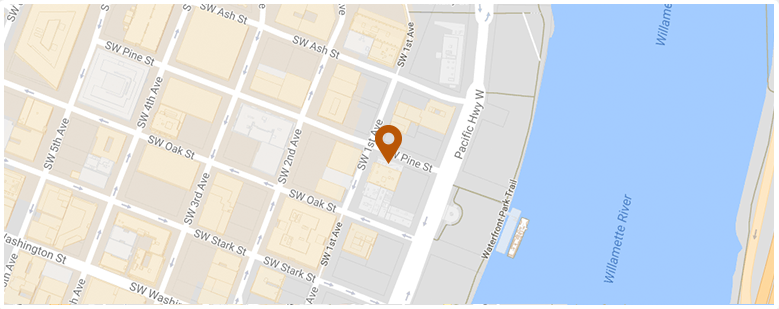
50 SW Pine St 3rd Floor Portland, OR 97204 Telephone: (503) 226-3844 Fax: (503) 943-6670 Email: matthew@mdkaplanlaw.com
map image