"I got into an accident and was nervous about finding a personal injury attorney after hearing so many awful stories, but from the start, I felt confident with my choice in Kaplan Law, LLC." Read More - Ben
"Matt and Gillian took great care of me during a stressful time of my life. Very caring and knowledgeable group. I would definitely recommend Kaplan Law!" Read More - Kayleigh
"Incredible service and results! Matthew Kaplan and his paralegal Gillian did an amazing job for me. Not only did they resolve my case beyond my satisfaction, they also were very caring and supportive thru my recovery. I couldn't ask for a better attorney." Read More - Jamal
Matthew D. Kaplan

Historically Labor Day weekend is second only to New Years when it comes to driving danger on Oregon’s roads. So it is good that both the Oregon State Police and a number of local departments are going out of their way to remind Oregonians and visitors to drive safely this holiday weekend, and are stepping up patrols designed to intercept Oregon drunk drivers. A news release from the OSP notes that the agency “will put all available sworn personnel assigned to field operations on the road” for a period that began Friday night and will continue through Monday night/Tuesday morning.

We have all, perhaps, become a bit too accustomed to warnings like this. Whenever holiday weekends roll around TV and newspaper stories appear, public service announcements are aired and blogs like this are posted.

So it is useful that the State Police have put the issue into stark perspective for those who might think that holiday drinking-and-driving is overhyped. An OSP news release (see link below) notes that “throughout the year, someone is killed on a road in the United States in an alcohol-impaired-driving crash every 51 minutes. Over the Labor Day weekend, that statistic jumps to one death nationally every 34 minutes.”

Portland residents began to get some sense this week of how the “street fee,” the proposal to help fund city roads and maintenance that has been debated all summer, may eventually help to improve health and safety around our city.

According to an article published this week in The Oregonian, “the (city’s) Transportation Needs and Funding Advisory Committee (this week) produced the most detailed list to date of potential transportation projects.”

Though explicitly described as a “wish list,” – a fact designed to indicate that not all of the projects listed in the report will be funded, and that some may be funded at different levels from those recommended in this report – the document does offer some sense of how city leaders would like to allocate the revenue raised by the Street Fee.  According to the newspaper “The list included an estimated $109 million in dozens of specifically identified sidewalks, pedestrian crossing, bicycle and other safety projects.” The estimate is “based on roughly $35 million annually in net revenue for a six year period.”

As we all prepare for another school year, SafeKids Oregon, an organization that regular readers will know I admire and support, is distributing an important report that is worth every parent’s attention. “Changing the Culture of Youth Sports” (see link below) offers essential information and perspective on injuries to children here in Oregon and elsewhere. The report is distributed by the umbrella organization SafeKids Worldwide. A summary can be found on the SafeKids Oregon homepage.

Among the report’s key findings are the disturbing fact that “One in four young athletes reported it is normal to commit hard fouls and play rough to ‘send a message’ during a game. This norm leads to a disturbing number of injuries: 33 percent of athletes report being hurt as the result of ‘dirty play’ from an opponent.” Among the report’s other key findings: “that athletes hide injuries to stay in the game” and that parents often try to get coaches to let their injured children participate in sports.

On one level none of this should be particularly surprising. From Hollywood’s images of sports in movies and TV shows to the sports broadcasts that can be found on television every night, sports culture celebrates toughness, ‘playing through the pain’ and a give-no-quarter attitude. Earlier this summer during the World Cup soccer tournament one player was celebrated for remaining in a game despite suffering a hard kick to the head – and despite the fact that TV viewers around the world could see that he was visibly woozy.

A story from Ohio last week highlights the danger of industrial accidents throughout the United States and the need for all of us to be vigilant. According to Ohio.com, the website of the Akron Beacon-Journal newspaper, “a 45-year-old man was killed after he was pulled into a machine while working at a northeast Ohio industrial company.”

The article goes on to note that the man died “after his clothing was stuck in the machine and he was pulled into it. A fire official said that when rescuers arrived… (the victim) had been freed from the machine by co-workers, but he died from crushing injuries.”

Had this industrial accident taken place here in Oregon there would be a number of clear-cut legal issues that would merit examination. In particular, we would have to consider whether the deceased and his co-workers were properly trained in the use of the equipment they were hired to operate and whether the employer maintained that equipment properly. The latter point is especially important because it highlights the responsibility of employers not only to give their staff the necessary and appropriate knowledge to do their jobs but also the employers’ responsibility to maintain the machinery in a safe manner.

A recent article in Slate highlighted an important but little noticed executive order signed by President Obama on the last day of July. According to the online magazine, the “Fair Play and Safe Workplaces” order, as it is formally known, “requires companies bidding for federal contracts worth more than $500,000 to make previous violations of labor law public, if they have any to report.” A less well-publicized, but potentially further-reaching, provision “says that companies with federal contracts worth more than $1 million can no longer force their employees out of court, and into arbitration, to settle accusations of workplace discrimination.”

As the article goes on to note, arbitration clauses buried deep in the fine print have been spreading widely since a Supreme Court ruling (focused on cellphone contracts) upheld them in 2011. The result has been a loss of court access for many Americans. This trend reached both absurd and frightening proportions earlier this summer when food giant General Mills tried to contend that by ‘liking’ any one of its many products on Facebook or other social media sites, or simply by purchasing an item, customers would surrender the right to sue the company ever, over anything.

General Mills later retreated in the face of a storm of public criticism, but the incident highlighted a trend in corporate America that is little-noticed but deeply disturbing: efforts to use ‘terms of service’ to force ordinary Americans to surrender our constitutional right to a trial by jury, as guaranteed by the 7th Amendment. Slate, citing figures compiled by the watchdog group Public Citizen, notes that since that 2011 Supreme Court decision “at least 139 class action suits have died” including cases “brought by consumers who said they’d been stung by predatory lenders, or misleading mortgages, or false promises by vocational schools. And also on the line are complaints by employees of discrimination on the job.”

A significant case involving alleged negligence leading to an industrial accident became more serious last week when obstruction of justice charges were added to it, according to the Associated Press. The news agency reports that a San Francisco-based “federal grand jury charged Pacific Gas & Electric… with lying to federal investigators in connection with a fatal pipeline explosion that killed eight people and leveled a suburban Northern California neighborhood in 2010.”

The AP reports that the new charge sheet lists a total of 28 counts against the utility giant, replacing an earlier indictment containing only 12 charges. It accuses PG&E of “lying to National Transportation Safety Board investigators after the blast.” In particular, it alleges that the company sought to mislead government officials about “pipeline testing and maintenance procedures.” A spokesman for PG&E told AP that he had not yet seen the charges, but that the company was expecting them. The company disputes the allegations.

If these charges are proven they reflect about as clear a case of bad corporate citizenship as one could imagine. Lying to federal investigators not before but after the company’s negligence has led to the deaths of eight people gives new meaning to the idea of putting profits before people. Righting wrongs like this is why we have an independent court system.

An article published earlier this month by Al Jazeera America looks at a new academic study focusing on the costs and benefits of bike lanes and other publicly-funded spending on cycling infrastructure. Living in Portland, a city often cited as one of the most bike-friendly in North America, its findings are not likely to be particularly controversial. Still, they are a useful reminder of how bike riding benefits the community at large and not just cyclists themselves.

The study (see link below) was published in Environmental Health Perspectives, an academic journal sponsored by the National Institutes of Health. It comes with the ponderous title “The Societal Costs and Benefits of commuter bicycling: Simulating the Effects of Specific Policies Using System Dynamics Modeling” but reaches, Al Jazeera reports, a fairly straightforward conclusion: “for every dollar spent on bike-related infrastructure, cities can receive anywhere from $6 to $24 in cost savings in the form of reductions to pollution and traffic congestion, as well as lowered health care costs from decreased traffic fatalities and increased exercise.”

Some of those conclusions may seem obvious to an audience here in bike-friendly Oregon, but they are a reminder that it is important to get the details of infrastructure right. More importantly, in focusing on the big picture – by, for example, citing long-term benefits such as lower health-care costs the study is especially useful.

In an effort to raise awareness regarding distracted driving Allstate, the insurance giant, is touring the country with a driving simulator designed to highlight the dangers of texting while behind the wheel.

According to a recent news release issued by the company (see below) the program, known as “Reality Rides,” was launched last summer and is expanding this year. It involves “a driving simulator that utilizes a real – but stationary – vehicle equipped with virtual reality technology, including a new curved LED television embedded in the car windshield. The television displays an animated environment and reacts to the driver’s motions.” Participants are invited to ‘drive’ the car while texting and/or talking on the phone as a way to experience just how significant the danger of distracted driving can be. Allstate plans to take the simulator to 40 cities over the course of the summer following what the company describes as a successful rollout of the program last year. This represents a significant expansion from the 26 “Reality Rides” events the company organized in 2013.

“Last year, the first tour surveyed more than 1,700 people… Seventy-three percent (of whom) said they learned more about distracted driving after experiencing the simulation,” the company says. The same survey – conducted at the simulator sites last year – found that “more than one-third of drivers say they text and drive at least some of the time.” The company is also using the simulator to promote Graduated Drivers License laws, under which teen drivers face more restrictions on their driving than adults. “Stronger teen driving laws… have been shown to reduce traffic fatalities by as much as 40 percent in the states where they have been adopted,” the company says.

As anyone who has watched the news over the last few weeks knows hot car deaths have once again been commanding attention this summer. Consider this one of those things regarding Oregon injuries to children that should not need to be said but, unfortunately, needs to be reinforced as we approach the hottest time of the year. As SafeKids Oregon reminds us all: “Hot weather and vehicles can be a deadly combination.”

The group’s latest news release continues: “There have been no overheating deaths in Oregon since 2004. Regrettably, 17 children have died from being left or trapped inside hot vehicles nationally in 2014 alone. In addition, there have been many ‘near misses.’” That national number is especially shocking when one considers that there is at least another six weeks of hot weather remaining pretty much everywhere in the country.

As they so often do, SafeKids offers easy and common sense advice on the best ways to avoid trouble. However, in addition to tips that are common knowledge – such as the fact that on a hot day the temperature inside a sealed car can rise by 20 degrees in just 10 minutes – they also offer some warnings that may come as news to many readers. Specifically, many people might not be aware that “cracking a window does little to keep the car cool.” This is an important point because it contradicts what many people think they know about hot cars and summer weather. Similarly, many readers might not be aware that the temperature outside need not be especially ‘hot’ for hot car deaths to occur. “With temperatures in the 60s, your car can heat up to well above 110 degrees.”

A ruling last week by the Oregon Court of Appeals broadens the traditional interpretation of our state’s dram shop laws and merits closer examination. According to an account published in The Oregonian the decision in a wrongful death lawsuit established that “party hosts whose invitees bring their own alcohol can still be held liable if drunken guests hurt themselves or others.”

The case is formally known as Baker v Croslin. As detailed by the newspaper, the facts of this important case are as follows: a man died in a 2010 shooting incident “after a night of extensive drinking and gunplay at a house party in Northeast Portland.” The party host “was convicted of criminally negligent homicide” but the victim’s widow also filed an Oregon wrongful death lawsuit.

“Under Oregon law, a party host can be held liable for damages caused by intoxicated guests if the host provided the alcohol to a visibly intoxicated guest, and if the host ‘substantially contributed to the intoxication of the guest,’” the newspaper notes. This is a succinct description of Oregon dram shop law – something about which I have written on this blog on numerous occasions. The Dram Shop Law is designed to encourage responsibility on the part of people serving or selling alcohol. We often talk about it in the context of drunk driving, though the details of this case are a powerful reminder that the consequences of reckless alcohol use extend far beyond cars and roads.

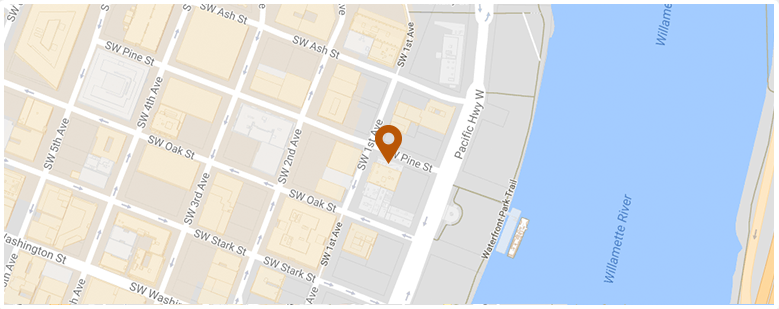
50 SW Pine St 3rd Floor Portland, OR 97204 Telephone: (503) 226-3844 Fax: (503) 943-6670 Email: matthew@mdkaplanlaw.com
map image