
Articles Posted in Injuries to Minors

An Oregon wrongful death lawsuit filed recently in Chiloquin raises new questions about the conduct of an area children’s center that has had a rocky relationship with state and local authorities.

According to the Klamath Falls Herald & News, the Oregon wrongful death suit against Kleos Children’s Community and the Klamath County Department of Human Services alleges that “a wheelchair-bound 14-year-old placed at Kleos under the directive of DHS died as a result of complications from two bilateral fractures to both femurs” as a result of a November 2010 accident.

The paper and local television station KOBI report that the suit claims that DHS was negligent in placing the child at a facility that, it says, could not properly address his “medical and physical needs.” The newspaper reports that the suit claims that Kleos was negligent in its treatment of the boy – both in initiating the actions that resulted in the accident, and, later, in its treatment of him following the incident. The boy died a day after suffering the two broken legs “when two employees of Kleos dropped him while trying to move him from his wheelchair to a new location.”
Now that Thanksgiving is over and Christmas, Hanukkah and the New Year are fast approaching it is a good time to remember that holiday joy should also be tempered with a measure of caution. Earlier this month the US Public Interest Research Group released its annual survey of dangerous toys, Trouble in Toyland. It is a reminder that parents need to take care during the coming weeks to ensure that unsafe products do not threaten their families.

The issue here is not so much the common dangers that any responsible parent is always aware of – choking hazards, for example (though, to be clear, these remain very real). Rather it is with manufacturing problems that parents may not immediately be able to see, but which pose a risk of death or serious injury to unsuspecting children.

Trouble in Toyland notes that “toys with high levels of toxic substances are still on store shelves, as well as toys with lead content above the 100 parts per million limit.” It also expresses particular concern about toys containing “small powerful magnets that pose a dangerous threat to children if swallowed.”

Following up a story I originally wrote about last month, there are new developments in the death of an 11-year-old Portland girl in a September accident involving a party bus.

According to The Oregonian the girl died when her skull was crushed as she “tumbled out of an emergency window on the bus when it careened around a corner… at Southwest First Avenue and Harrison Street.” She is reported to have been sitting atop a horseshoe-shaped couch in the back of the bus at the time of the fatal Portland bus accident. “The bus was full of kids on their way to a birthday party but no adults were in the back,” the newspaper reports.

As troubling as this lack of adult supervision is the revelation that the bus itself lacked the proper safety inspection permit and was being operated by a man who was not licensed to drive this type of vehicle, according to The Oregonian. This image of a company putting immediate profits ahead of safety is chilling not only for any parent considering whether to let a child attend a party involving this sort of bus but, frankly, for any adult who might be thinking of hiring a party bus for a special celebration. The fact that a window that was supposed to function as an emergency exit flew open so easily is a reminder of how essential the required government safety inspections are.

In a recent article in the New York Times Dr. Robert C. Cantu, a professor of neurosurgery at Boston University, issued a thoughtful, yet passionate, call for parents and school officials to rethink the way we approach youth sports here in the United States.

Writing that he meets with some 1,500 concussion patients each year, Dr. Cantu lays out the case for lowering the degree and intensity of contact that younger children experience across a range of sports. “In light of what we now know about concussions and the brains of children,” he writes, “many sports should be fine-tuned.” Dr. Cantu writes that children under 14 are fundamentally more vulnerable than older teenagers or adults. “A child’s brain and head are disproportionately large for the rest of the body,” he notes. “And a child’s weak neck cannot brace for a hit the way an adult’s can. (Think of a bobblehead doll.)”

He begins the piece by focusing on football, where he believes tackling should be eliminated for children under 14, but emphasizes that head trauma, concussions and brain injuries are all more common in other sports than is popularly believed. His piece goes on to propose rule changes in soccer, ice hockey, baseball, softball, field hockey and girls’ lacrosse – many of which are not activities most of us think of as contact sports.

A lengthy article published this week in Washington’s Kitsap Sun looks at the issue of traumatic brain injuries – particularly concussions – among young athletes. As the paper notes, “the U.S. Centers for Disease Control and Prevention estimates more than 3.5 million concussions – defined as traumatic brain injuries – occur each year on ball fields and (in) sports venues across the country.”

The article focuses on the Zackery Lystedt law, a measure enacted in Washington in 2009 that prevents high school age and younger athletes “with suspected concussions from returning to the playing field without authorization from a licensed health care provider.” The law is named after a junior-high football player who suffered permanent brain damage and disability as a result of a 2006 game. The paper notes that “return-to-play legislation modeled after the Lystedt Law has since been adopted in 39 other states.”

According to SafeKids.org, Oregon’s own youth sports-focused TBI legislation, enacted about the same time as the Washington Law, offers some key safeguards but does not go nearly as far. A important difference is that Washington teens must be pulled from a game or practice if there is reason to believe that they may have suffered a concussion. Here in Oregon removing the athlete from competition or practice only becomes mandatory once they exhibit symptoms of a possible traumatic brain injury. Once an athlete has been pulled from the field both states require written clearance from a medical professional before the player can return to practices or competitions.

The recent death of an 11-year-old girl who was accidently thrown from a Portland party bus, as outlined in The Oregonian, is raising many disturbing questions about this often under-regulated industry and about the conduct of the adults involved. According to the newspaper, the child died when she “tumbled out of an emergency window when the bus turned a corner.” This Portland fatal child injury accident would be bad enough by itself, but the details surrounding it are truly shocking.

The Oregonian reports that the victim was part of a large group of children who were board the party bus with no adult supervision. The vehicle’s 61-year old driver was the only grown-up on board the bus. Moreover, the driver himself “wasn’t permitted to operate a party bus carrying about 20. The bus didn’t have a permit from the city of Portland, either” the newspaper adds.

The amount of irresponsibility on display here is really quite stunning. Why did the company let a driver lacking the proper license operate any of its vehicles, let alone one carrying children? Why would it even allow a party bus filled with children out on the road without any adult supervision? Even if the driver were properly qualified to operate the vehicle, a bus driver who is doing his job cannot do so safely while also supervising nearly two dozen children.

A recent op-ed published by The Oregonian calls for parents to take more care, and schools to take more responsibility, when it comes to preventing concussions and traumatic brain injuries among student athletes, especially younger athletes still in high school.

The column was written by James Chesnutt. He is identified in the article’s footer as a doctor and the “medical director of the OHSU sports medicine program.”

In the article he says that he is writing to encourage “all Oregon high schools to agree to a management protocol to help their student athletes deal with concussions.” He writes: “The protocol calls for schools to establish a plan to help a student recover.” This, he adds, could include time off from school following a head injury.

This week – from now until Saturday September 22 – is National Child Passenger Safety Week. It is an excellent time to remind ourselves of the importance of preventing injuries to children in Oregon auto accidents.

Here in Oregon the public awareness events for National Child Passenger Safety Week are being led by SafeKids Oregon. The SafeKids webpage devoted to the week and its related activities opens with some stark statistics that put the problem into perspective:

“Motor vehicle traffic crashes,” it notes, “remain the leading cause of death for children ages 1 through 12 years old.” It also notes that fully 75% of children riding in American cars “are not as secure as they should be because their car seats are not being used correctly.”

A recent account in TDN.com, a Longview, Washington-based news site, lays out the horrible tale of a 5-year-old boy attacked by a pitbull and police efforts to find the animal. The dog attack took place as “the victim was riding his bike on the sidewalk when the dog, tethered to a 15-foot rope outside a duplex” bit him. The newspaper reports that there were no witness to the initial attack “but neighbors heard the boy screaming and pulled the dog off the boy.”

The victim needed 40 stitches and may eventually require further medical attention, such as a skin graft.

Despite being tethered at the time of the attack the animal is still at large because, TDN reports, “when animal control authorities arrived… the 3-year-old pitbull named Lexi was gone. Lexi’s owner (said) her son had taken off with the dog and she did not know where he was.” According to the newspaper local authorities are especially concerned about finding the pitbull so that they can ensure it has been properly vaccinated against rabies, after it was discovered that “employees at the Oregon animal hospital listed on the (rabies) certificate said the veterinarian who allegedly signed it had never worked at the clinic” and that the animal had never been treated there.

The family of a New York teenager who disappeared on a trip to Hawaii and is presumed dead has filed a wrongful death lawsuit in federal court in Hawaii, claiming that the guides on their son’s tour made an “outrageously reckless and irresponsible decision” in taking a group of high school students into a “treacherous lava rock area,” according to accounts by the Associated Press and a local Honolulu TV station.

The 15-year-old boy from White Plains, New York was visiting Hawaii with a teen tour group. Both the umbrella group and its local contractors were named in the suit, the news agency reports. According to the AP, while hiking on July 4 the group “stopped to rest at a tide pool, authorities said. The teens were led to an area that’s out of a state-permitted area despite dangerous surf warnings, according to the suit.”

When large waves came into the tide pool the children scrambled for cover but the victim was swept out to sea. The guides and their employers contend that the adults on the scene did all they could to search for and save the victim, but he has been missing ever since and is now presumed dead.

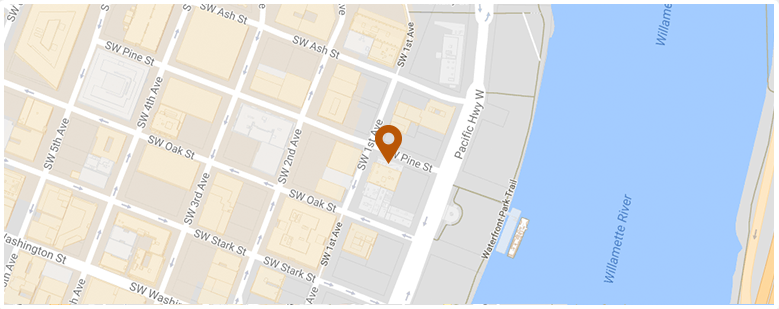
50 SW Pine St 3rd Floor Portland, OR 97204 Telephone: (503) 226-3844 Fax: (503) 943-6670 Email: matthew@mdkaplanlaw.com
map image