
Articles Posted in Injuries to Minors

A recent article in the Homes & Gardens section of The Oregonian noted something that many readers might not know: home inspectors can and do offer advice that goes far beyond highlighting things that need fixing in a house that is about to be sold.

The paper quotes Nick Gromicko, author of The Safe Home and a certified Home Inspector, saying “I wrote the book after realizing consumers mistakenly believe they are hiring a home inspector only to find defects in systems and components… more often than not, the home inspector alerts the consumer to safety concerns.” The article goes on to offer important tips on crib safety, preventing furniture hazards that might crush a child (such as an entertainment center or bookcase tipping over), preventing window falls, safety gates and the child-proofing of stairs and railings. All tips, in other words, designed to reduce or eliminate injuries to children.

Some of these are essential tips I have written about before, such as installing window stops to prevent children from squeezing through an open window, or a reminder that safety gates are of little use if they do not meet recognized national standards. Other advice, however, falls into the category of ‘things that ought to be obvious but sometimes aren’t.’ For example Gromicko’s reminder that parents should “ensure that… any furniture a child could potentially climb on should be moved away from windows.”
Raised awareness of the frequency of concussions among young people, particularly athletes, and the importance of treating them properly has led to a growing amount of scientific research on the subject. A particular focus of attention has been the best way to treat people in the immediate aftermath of a traumatic brain injury. Athletes, of course, should be removed from a game immediately, but the longer-term question of treatment during the days following an accident has received less attention.

According to a recent article in the New York Times new research is questioning one commonly recommended post-TBI treatment technique. Known as “cocoon therapy” the procedure, according to the newspaper, “entails mostly lying in a dark room for multiple days.” The Times reports that a new study suggests that among children “resting for longer than 24 to 48 hours is not beneficial for most young patients.”

“More isn’t always better,” the paper quotes a doctor at UCLA saying. “There was no advantage to prolonged rest.” It adds that this was not the conclusion the researchers expected to find when they set up the clinical trial. Instead, the study “found that the patients advised to rest for five days reported more physical symptoms like headache and nausea in the first few days, and more often experienced emotional symptoms like irritability and sadness over 10 days… The available evidence suggests that young patients with a concussion should rest away from school and work for the first 24 to 48 hours, experts said.”

If there is any night of the year when extra-cautious driving and attention to pedestrian safety are required in residential areas it is Halloween. Small children are everywhere, running up and down streets, many of them dressed in dark costumes as the sun sets. The news spreading around the northwest today is of a terrible accident that appears to have brought this fact home in the worst possible way.

According to The Oregonian “two girls, ages 6 and 7, and a 20-year-old woman were in critical condition with life-threatening injuries on Saturday morning, police said. The woman was reportedly put into a medically-induced coma.” This was the tragic outcome of an apparent Washington drunk or impaired driving incident in which “a Ford Mustang… jumped the curb and struck a group of trick-or-treaters on a Vancouver sidewalk Friday night.” The newspaper adds that, according to police, the man driving the car “was likely speeding and driving impaired.” A 33-year-old woman also suffered broken bones in the Washington car accident.

Police say the driver, a 47-year-old male, only came to a stop after hitting a pole. He is reported to have only minor injuries. The paper reports that toxicology tests are still being conducted but the police already suspect that drugs may also have been a factor in the driver’s impairment.

The death earlier this month of a six-month old Hillsboro girl whose father forgot that she was in the back of his car when he went inside his office for work is a sad reminder of a problem that is far more extensive than most people think. As The Oregonian put it last weekend, “though the tragedy that played out in Hillsboro… is incomprehensible to many, research shows it’s a scenario that has played out hundreds of times nationwide since the late 1990s as parents and caregivers grapple with a growing litany of distractions.”

This Oregon child death is also a reminder, as SafeKids tells parents every year (see link below) around this time, that even as the weather turns cooler a closed car can still become very, very hot as it sits in the sun for hour after hour.

“In the United States, at least 635 children have died of hyperthermia in vehicles since 1998. In 51 percent of those cases, the parent of caregiver said they had forgotten the child was inside,” the paper reports, citing data from an expert on the subject at San Jose State University in California.

A recent news item from Maine offers an important autumn reminder about safety and Oregon injuries to children. According to the Portland (Maine) Press-Herald, a teenager died and 22 other people were injured when “a mechanical malfunction caused the Jeep towing a trailer of passengers on a haunted hayride… to careen down a steep hill and crash.” The report cites information from “state officials.”

The newspaper reports that local and state police are still working to determine the exact cause of the accident, but the overall nature of the incident is something that merits our attention here in Oregon. Fall and the early part of winter are times when hayrides, Christmas tree cutting parties and similar activities take many people outdoors in unusual ways. No one would suggest banning this kind of family Halloween, Thanksgiving and Christmas fun, but this tragic incident in Maine is a reminder that safety also needs to be considered when planning these kind of events.

The fact that events like these often involve children only makes the need for safety more critical. Whether it is a Halloween Hayride or a Christmas tree cutting party (that might involve children who have never before been close to power tools), it is critical that anyone organizing events like these take appropriate precautions to ensure the safety of everyone involved.

A mysterious outbreak of E. coli here in Oregon has left one child dead and resulted in injuries to two others, leaving parents and public health officials alike struggling for answers here in the Pacific Northwest.

As The Oregonian reported last week “all three children – ages 3, 4 and 5 – were at birthday parties in Lebanon on August 23. All three were exposed to recreational water and ate watermelon. All three suffered kidney failure.” Though it is worth adding that the children were not all attending the same birthday party (two were at one party and the third child was at a different party) the similarity of the cases does raise significant questions, particularly whether something in the food they ate may have been tainted.

As the newspaper notes, in the wake of these injuries to several children state health officials in both Washington and Oregon have been interviewing the parents as well as other adults in an effort to track and isolate the cause of the outbreak. “Without a solid culprit, such as an undercooked hamburger, epidemiologists can link cases with DNA tests on the bacteria,” the paper notes.

As we all prepare for another school year, SafeKids Oregon, an organization that regular readers will know I admire and support, is distributing an important report that is worth every parent’s attention. “Changing the Culture of Youth Sports” (see link below) offers essential information and perspective on injuries to children here in Oregon and elsewhere. The report is distributed by the umbrella organization SafeKids Worldwide. A summary can be found on the SafeKids Oregon homepage.

Among the report’s key findings are the disturbing fact that “One in four young athletes reported it is normal to commit hard fouls and play rough to ‘send a message’ during a game. This norm leads to a disturbing number of injuries: 33 percent of athletes report being hurt as the result of ‘dirty play’ from an opponent.” Among the report’s other key findings: “that athletes hide injuries to stay in the game” and that parents often try to get coaches to let their injured children participate in sports.

On one level none of this should be particularly surprising. From Hollywood’s images of sports in movies and TV shows to the sports broadcasts that can be found on television every night, sports culture celebrates toughness, ‘playing through the pain’ and a give-no-quarter attitude. Earlier this summer during the World Cup soccer tournament one player was celebrated for remaining in a game despite suffering a hard kick to the head – and despite the fact that TV viewers around the world could see that he was visibly woozy.

In an effort to raise awareness regarding distracted driving Allstate, the insurance giant, is touring the country with a driving simulator designed to highlight the dangers of texting while behind the wheel.

According to a recent news release issued by the company (see below) the program, known as “Reality Rides,” was launched last summer and is expanding this year. It involves “a driving simulator that utilizes a real – but stationary – vehicle equipped with virtual reality technology, including a new curved LED television embedded in the car windshield. The television displays an animated environment and reacts to the driver’s motions.” Participants are invited to ‘drive’ the car while texting and/or talking on the phone as a way to experience just how significant the danger of distracted driving can be. Allstate plans to take the simulator to 40 cities over the course of the summer following what the company describes as a successful rollout of the program last year. This represents a significant expansion from the 26 “Reality Rides” events the company organized in 2013.

“Last year, the first tour surveyed more than 1,700 people… Seventy-three percent (of whom) said they learned more about distracted driving after experiencing the simulation,” the company says. The same survey – conducted at the simulator sites last year – found that “more than one-third of drivers say they text and drive at least some of the time.” The company is also using the simulator to promote Graduated Drivers License laws, under which teen drivers face more restrictions on their driving than adults. “Stronger teen driving laws… have been shown to reduce traffic fatalities by as much as 40 percent in the states where they have been adopted,” the company says.

As anyone who has watched the news over the last few weeks knows hot car deaths have once again been commanding attention this summer. Consider this one of those things regarding Oregon injuries to children that should not need to be said but, unfortunately, needs to be reinforced as we approach the hottest time of the year. As SafeKids Oregon reminds us all: “Hot weather and vehicles can be a deadly combination.”

The group’s latest news release continues: “There have been no overheating deaths in Oregon since 2004. Regrettably, 17 children have died from being left or trapped inside hot vehicles nationally in 2014 alone. In addition, there have been many ‘near misses.’” That national number is especially shocking when one considers that there is at least another six weeks of hot weather remaining pretty much everywhere in the country.

As they so often do, SafeKids offers easy and common sense advice on the best ways to avoid trouble. However, in addition to tips that are common knowledge – such as the fact that on a hot day the temperature inside a sealed car can rise by 20 degrees in just 10 minutes – they also offer some warnings that may come as news to many readers. Specifically, many people might not be aware that “cracking a window does little to keep the car cool.” This is an important point because it contradicts what many people think they know about hot cars and summer weather. Similarly, many readers might not be aware that the temperature outside need not be especially ‘hot’ for hot car deaths to occur. “With temperatures in the 60s, your car can heat up to well above 110 degrees.”

Just as the July 4 holiday weekend got underway news broke of a sweeping recall of school buses. According to an Associated Press report, republished by ABC News, “Blue Bird is recalling more than 2,500 All American school buses and some transit buses to fix a problem that could make steering more difficult. The company also is recalling a smaller number of school buses that may be prone to a propane fuel leak, according to paperwork filed with the National Highway Traffic Safety Administration.”

It will be worth keeping an eye on the NHTSA vehicle recall website over the next week or two for further details as this story develops. At this writing the NHTSA had not posted information about the Blue Bird recall, presumably because the company’s paperwork has not yet been completely processed. In the meantime, however, it is safe to say that it is difficult to imagine a clearer risk of injuries to children than a school bus with a steering or a fuel leak issue.

The AP story did not say how many school buses are affected by the steering-related recall notice, only that it involves “some buses made between 2011 and last May.” The story put the number of transit buses affected at 400, but did not say in which cities they are currently on the road. The fuel leak issue involves “388 Vision school buses made in 2012 or 2013,” the news agency reports.

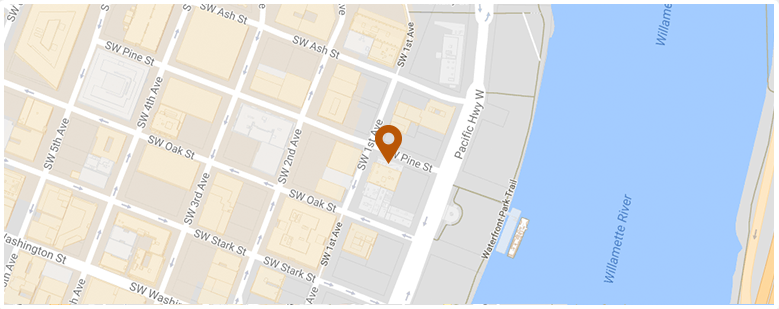
50 SW Pine St 3rd Floor Portland, OR 97204 Telephone: (503) 226-3844 Fax: (503) 943-6670 Email: matthew@mdkaplanlaw.com
map image