Articles Posted in Drunk Driving

As an article in today’s Oregonian warns, Halloween has long been a night when pedestrians and drivers alike need to exercise particular caution. This year, however, the fact that October 31 is also the evening when we move from daylight saving time back to standard time makes tonight especially dangerous.

Halloween has always been a night when everyone should be especially aware of the possibility of injuries to children. In the twilight and early evening hours small children – many wearing dark costumes – are running around residential neighborhoods all over the country. The danger of a car accident rises significantly even for the most careful of drivers. The Oregonian reports that Halloween is traditionally the third-worst day of the year for pedestrian fatalities, surpassed only by New Year’s Day and December 23.

In recent decades, however, Halloween has also emerged as an adult party night with a reputation for drinking and driving that rivals New Year’s Eve. According to today’s article “in 2012 when 54 pedestrians died in car crashes on Halloween nationwide, nearly half of those deaths involved a drunk driver.”

A Harrisburg car crash over the weekend left a 19-year-old man dead and has led to the arrest of the vehicle’s 20-year-old driver, according to The Oregonian. “Police said alcohol and drugs likely were contributing factors. There was evidence to show that the driver… was allegedly (had) over twice the legal limit of alcohol (in his bloodstream) and had used cocaine and marijuana,” the paper reports.

Citing local police, the paper reports that the driver failed to make his way around a curve on a road in Linn County causing his minivan to roll several times. Of the three passengers in the van one was ejected and thrown some 50 feet. He was pronounced dead at the scene. The driver and the other two passengers, both of whom are 18 years old, were treated for “non-life threatening” injuries at an area hospital.

After his release from the hospital the driver “was booked into the Linn County Jail on charges of Manslaughter I, Assault II and DUII,” the newspaper reports.

A single-vehicle Portland car accident that killed one person and injured two others spotlights both the dangers of reckless and drunk driving and its broader legal implications, even when a second car is not involved.

According to a report earlier this week in The Oregonian a 29 year old man who was riding in the back seat of an SUV died when he was thrown from the vehicle during “a fatal crash Sunday night off Northwest Skyline Boulevard.” The paper reports that “the SUV rolled down a steep embankment toward the 6600 block of Meridian Ridge Drive where it struck a house and caught fire. Neighbors were able to extinguish the fire and no one in the home was injured.” The newspaper, quoting police, says that the SUV’s 39-year-old driver remains in an area hospital in critical condition. The other passenger, a 30-year-old woman, “was treated for her injuries and released” from the hospital.

As the paper notes, “while the cause of the crash remains under investigation… (police) said it appears that alcohol and excessive speed were both contributing factors.”

A recent article in the Keizer Times highlighted the story of a local man who is struggling to recover after an Oregon bicycle accident involving a drunk driver. According to the newspaper the 59-year old “had plans to compete in some bicycle competitions this summer,” instead he is now working to recover from extensive injuries as he and his family look for a longer-term rehab facility.

The newspaper reports that the accident took place March 14 when the cyclist was riding “near Antelope in Central Oregon.” Citing a State Police report, the paper says a 56-year-old woman “was driving a 2007 Toyota Tundra and pulling a trailer westbound on Highway 218 in Wasco County when the right side of her pick-up hit” the bike rider. The driver left the scene of the accident and was later “arrested and charged with driving under the influence of intoxicants, failure to perform the duties of a driver, reckless driving and second-degree assault.”

The cyclist was initially taken to a local hospital and later moved to a different hospital in Bend. He suffered “four broken ribs on the left side, several breaks in his lower left leg, a broken left scapula (shoulder blade), a cut on the left side of his temple and a concussion,” according to the Keizer Times. A friend describes him as “recovering as well as can be expected.”

With the New Year’s holiday fast approaching this is a good time to remind everyone of the importance of avoiding Oregon drunk driving. As I have written about in previous years, New Year’s Eve is often a time when people over-indulge, including people who would never think of drinking and driving at other times of the year. The good news is that here in Portland Tri-Met is doing its part to help cut down on holiday drunk driving.

According to a news release from Tri-Met “all service is free after 8 p.m. on New Year’s Eve.” Buses will be on their regular weekday schedules as will Blue, Green and Yellow MAX trains. Late night service will continue at 30 minute intervals until shortly after 3 a.m. MAX Red Line trains will be on a normal schedule, with shuttle buses to the airport picking up after train service stops for the night. The Portland Streetcar will also operate a normal weekday schedule.

As a recent article in The Oregonian noted, an analysis by the newspaper found that on New Year’s Eve 2011 and New Year’s Day 2012 “there were 82 fatal accidents involving at least one drunken driver, one of them in Oregon… More than half of the deaths on New Year’s Days from 2008 to 2012 involved at least one drunken driver, more than any other holiday, an analysis by the Insurance Institute for Highway Safety found.”

If there is any night of the year when extra-cautious driving and attention to pedestrian safety are required in residential areas it is Halloween. Small children are everywhere, running up and down streets, many of them dressed in dark costumes as the sun sets. The news spreading around the northwest today is of a terrible accident that appears to have brought this fact home in the worst possible way.

According to The Oregonian “two girls, ages 6 and 7, and a 20-year-old woman were in critical condition with life-threatening injuries on Saturday morning, police said. The woman was reportedly put into a medically-induced coma.” This was the tragic outcome of an apparent Washington drunk or impaired driving incident in which “a Ford Mustang… jumped the curb and struck a group of trick-or-treaters on a Vancouver sidewalk Friday night.” The newspaper adds that, according to police, the man driving the car “was likely speeding and driving impaired.” A 33-year-old woman also suffered broken bones in the Washington car accident.

Police say the driver, a 47-year-old male, only came to a stop after hitting a pole. He is reported to have only minor injuries. The paper reports that toxicology tests are still being conducted but the police already suspect that drugs may also have been a factor in the driver’s impairment.

Citing new figures published by the Centers for Disease Control, Oregon Public Broadcasting reports that “excessive drinking accounts for one in every nine deaths in Oregon.” That figure, it adds, puts our state on the wrong side of the national average, which is one death in 10.

Between drunk driving and other well-known alcohol-related risks the figure is, perhaps, less surprising than it might seem. It is worth noting that the study focused on the broad health risks associated with alcohol. While drunk driving was included it was not the sole focus of the research. According to OPB “The study looked at binge drinking, defined as four or more drinks for women and five or more for men, as well as heavy drinking, which is eight drinks a week for a woman and 15 for a man.”

The focus on binge drinking also highlights the importance of strict enforcement of Oregon dram shop laws. These extend responsibility for injuries and damage caused by a drunk person to bars, taverns and any business that sells alcohol. The dram shop rules are a reminder that cutting off someone who is drinking too much is everyone’s responsibility, not just that of the drinker himself or his companions.

Recreational use of marijuana is now legal in two states, including Washington State, and Oregon is among the ever-increasing number of states that permit marijuana use for medical purposes.

As legal acceptance of the drug grows it was, perhaps, inevitable that, in the words of USA Today, “it’s looking like dope is playing a larger role as a cause of fatal traffic accidents.” Put another way: advocates of legalization have long argued that marijuana is no worse for you than alcohol. If, for the sake of argument, we accept that premise then it clearly follows that driving while high should be treated with the same degree of seriousness as driving while drunk.

The evidence is not merely anecdotal. According to USA Today, a recent study by Columbia University found that “of nearly 24,000 driving fatalities… marijuana contributed to 12% of traffic deaths in 2010, tripled from a decade earlier.” The newspaper reports that a recent National Highway Traffic Safety Administration study estimated that “4% of drivers were high during the day and more than 6% at night.” The majority of high drivers were under age 25 – an age group that already has proportionately high levels of both drunk driving and distracted driving, both here in Oregon and elsewhere around the country.

An article in Wednesday’s Oregonian raised an interesting question: how many Portlanders are aware that traffic enforcement does not take place overnight? According to the newspaper the city’s last budget cut police funding and, as a result, “the (traffic enforcement) bureau lost five full-time officer positions, and so eliminated the 9 pm to 7 am traffic shift Wednesday through Saturday.”

What this means in practice is that there are fewer officers available to enforce Oregon drunk driving laws. The newspaper quotes Portland police chief Mike Reese saying: “Traffic officers are committed to saving lives. They hold people accountable when they break the law… It’s not easy work. DUII investigations require skill to make arrests prosecutable.” The chief is asking the City Council for $300,000 in additional funds to restore four of the five overnight officer positions that have been lost.

While there are no available statistics looking at how fatal Oregon car crashes are distributed throughout the day, the newspaper notes that Washington State does keep such records. North of the Columbia River “60 percent of all fatal crashes occur between 7 pm and 5 am,” according to a Portland police spokesman cited by the newspaper. There is no reason to suppose that the pattern is not at least broadly similar here in Oregon.

In Salem today the Senate Judiciary Committee sent to the full Senate an important bill that could change the way Oregon drunk driving cases are decided. According to The Oregonian the legislation “would no longer require everyone on diversion for drunken or drugged driving to install… interlock devices, which force drivers to blow into a breathalyzer that shows they haven’t been drinking before their car will start.” According to the newspaper “about 10,000 people a year are placed on diversion for the first-time offenses of driving while intoxicated, and about 70 percent never commit another offense.”

At issue are that recidivism rate and a debate about how closely practice here in Oregon should resemble that in other states.

Proponents of the bill note that for many people DUII is a one-time offense. “My experience says that the vast majority of the individuals are in the system once and only once,” the paper quotes Senate Judiciary Committee Chairman Floyd Prozanski saying. The counter-argument, spearheaded by Mothers Against Drunk Driving (MADD) is that “many offenders repeatedly drive drunk before they’re caught for the first time” the newspaper reports. It cites MADD’s legislative director, Frank Harris, accusing the legislature of “playing some risky business with public safety.”

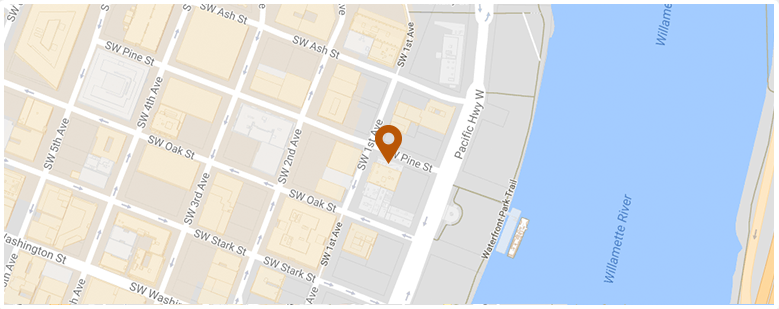
50 SW Pine St 3rd Floor Portland, OR 97204 Telephone: (503) 226-3844 Fax: (503) 943-6670 Email: matthew@mdkaplanlaw.com
map image