"I got into an accident and was nervous about finding a personal injury attorney after hearing so many awful stories, but from the start, I felt confident with my choice in Kaplan Law, LLC." Read More - Ben
"Matt and Gillian took great care of me during a stressful time of my life. Very caring and knowledgeable group. I would definitely recommend Kaplan Law!" Read More - Kayleigh
"Incredible service and results! Matthew Kaplan and his paralegal Gillian did an amazing job for me. Not only did they resolve my case beyond my satisfaction, they also were very caring and supportive thru my recovery. I couldn't ask for a better attorney." Read More - Jamal
Matthew D. Kaplan

Just as the July 4 holiday weekend got underway news broke of a sweeping recall of school buses. According to an Associated Press report, republished by ABC News, “Blue Bird is recalling more than 2,500 All American school buses and some transit buses to fix a problem that could make steering more difficult. The company also is recalling a smaller number of school buses that may be prone to a propane fuel leak, according to paperwork filed with the National Highway Traffic Safety Administration.”

It will be worth keeping an eye on the NHTSA vehicle recall website over the next week or two for further details as this story develops. At this writing the NHTSA had not posted information about the Blue Bird recall, presumably because the company’s paperwork has not yet been completely processed. In the meantime, however, it is safe to say that it is difficult to imagine a clearer risk of injuries to children than a school bus with a steering or a fuel leak issue.

The AP story did not say how many school buses are affected by the steering-related recall notice, only that it involves “some buses made between 2011 and last May.” The story put the number of transit buses affected at 400, but did not say in which cities they are currently on the road. The fuel leak issue involves “388 Vision school buses made in 2012 or 2013,” the news agency reports.

When July began on Tuesday an important new Oregon law also went into effect. As reported by The Oregonian a new “mediation program… (gives) patients and their families an option besides suing when medical errors happen.”

The measure was a priority for Gov. John Kitzhaber and, as the newspaper notes, became law following input from both trial lawyers and the Oregon Medical Association. The new law “is intended to cut down on lawsuits and boost the reporting of medical errors to help improve health care practices.”

Some practical details remain to be worked out, and it will take months if not several years before we can say with certainty how well the program is working in practice, but as a public health matter we should all hope that the Early Discussion and Resolution Program, as it is formally known, performs as expected. As I have written in this space as recently as last month, medical mistakes remain far too common in our state and reducing or eliminating them is made more difficult by a reporting system that remains, to a great extent, voluntary. As a result, doctors and patients alike are often working from inadequate data. A system that improved both the volume and the quality of data on medical mistakes would be a huge boon to everyone.

Citing new figures published by the Centers for Disease Control, Oregon Public Broadcasting reports that “excessive drinking accounts for one in every nine deaths in Oregon.” That figure, it adds, puts our state on the wrong side of the national average, which is one death in 10.

Between drunk driving and other well-known alcohol-related risks the figure is, perhaps, less surprising than it might seem. It is worth noting that the study focused on the broad health risks associated with alcohol. While drunk driving was included it was not the sole focus of the research. According to OPB “The study looked at binge drinking, defined as four or more drinks for women and five or more for men, as well as heavy drinking, which is eight drinks a week for a woman and 15 for a man.”

The focus on binge drinking also highlights the importance of strict enforcement of Oregon dram shop laws. These extend responsibility for injuries and damage caused by a drunk person to bars, taverns and any business that sells alcohol. The dram shop rules are a reminder that cutting off someone who is drinking too much is everyone’s responsibility, not just that of the drinker himself or his companions.

A former NFL player and a former pro wrestler traveled to Capitol Hill this week to warn fellow athletes about the dangers of traumatic brain injuries – but unlike many recent TBI-focused events in Washington in recent months the emphasis of this news conference was teens, not fellow retired pros.

According to a report published by CBS News both “Chris Nowinski, a Harvard graduate and former professional wrestler… and Ben Utecht, a former NFL player for the Cincinnati Bengals and Indianapolis Colts, still suffer years later as a result of these all-too-common injuries.” Testifying before the Senate Special Committee on Ageing, both men focused not on the dangers to professionals like themselves, but on the damage and long-term consequences too many young people risk.

Nowinski told the senators that he suffered a head injury during a wrestling match at age 24, but ignored the symptoms for five weeks. “I lied about my symptoms for five weeks, thinking I was doing the right thing… My ignorance cost me my career, cost me at least five years of my health… and I don’t know what it’s going to cost me in the future,” he said. His biggest fear is CTE – a “progressive neurodegenerative disease (that) can emerge from repeated blows to the head.” He also spoke about the growing body of evidence hinting at a link between traumatic brain injuries sustained in youth and the onset of Alzheimer’s and similar diseases later in life.

With the arrival of summer it is time, once again, to remind every parent (and older sibling) out there of the importance of protecting children from window falls. These tragedies are among the most easily preventable Oregon injuries to children.

The issue is back in the news after two incidents in recent weeks here in Oregon, one of them fatal. Earlier this month a four-year-old North Portland boy died after falling from a 3rd floor window, according to television station KOIN. The station also reports that a Beaverton girl was seriously injured in April after a fall from a second floor window.

As the station notes, “statistics show more than 3000 children under the age of 6 fall from windows every year.” It might have added that window fall incidents regularly rise each summer – making the timing of the station’s report particularly important. What makes these incidents especially heart-breaking is how easily preventable they are. It starts, of course, with education – reminding adults as well as kids that screen windows, which are designed to keep bugs out, are never strong enough to prevent even a relatively small child from falling, and reminding parents that children – small ones especially – need to be watched carefully, and should never be left alone in a room with an unlocked window, let alone an open one.

Bicyclist deaths in traffic accidents rose in 2012 (the most recent year for which data is available) both in absolute numbers and as a fraction of the nation’s overall road and highway death toll, according to a new report released by the National Highway Traffic Safety Administration.

As a table on the first page of the report shows, the total number of traffic-related fatalities fell by more than 20% over the last decade, from 42,884 nationwide in 2003 to 33,561 in 2012. During that same time period, however, the number of bicyclists killed on America’s roads rose from 629 to 726 – an increase of almost 20 percent. As a portion of overall traffic-related deaths that represented an increase from 1.5 percent to 2.2 percent – a small portion of the overall number, but a dramatic increase proportionately speaking.

At a time when people across the country are becoming more aware of the health and environmental benefits of cycling these are worrying numbers. It is good to see that tougher enforcement and better public education have brought the overall traffic death rate down so dramatically (indeed, in the 1970s and 80s it was well over 50,000 per year). At the same time it is alarming to see the rate of bicycle accidents and fatalities rise – especially in an era when one might hope that more bikes on our streets would lead to greater awareness and caution among drivers.

Recreational use of marijuana is now legal in two states, including Washington State, and Oregon is among the ever-increasing number of states that permit marijuana use for medical purposes.

As legal acceptance of the drug grows it was, perhaps, inevitable that, in the words of USA Today, “it’s looking like dope is playing a larger role as a cause of fatal traffic accidents.” Put another way: advocates of legalization have long argued that marijuana is no worse for you than alcohol. If, for the sake of argument, we accept that premise then it clearly follows that driving while high should be treated with the same degree of seriousness as driving while drunk.

The evidence is not merely anecdotal. According to USA Today, a recent study by Columbia University found that “of nearly 24,000 driving fatalities… marijuana contributed to 12% of traffic deaths in 2010, tripled from a decade earlier.” The newspaper reports that a recent National Highway Traffic Safety Administration study estimated that “4% of drivers were high during the day and more than 6% at night.” The majority of high drivers were under age 25 – an age group that already has proportionately high levels of both drunk driving and distracted driving, both here in Oregon and elsewhere around the country.

A story earlier this week on Oregon Public Broadcasting began with a stark statistic: “Oregon’s health care facilities reported more than 650 adverse events last year, 44 percent of which ended in serious harm or death, according to a new report by the Oregon Patient Safety Reporting Program.” Forty-four percent means that, as the article’s headline put it: “285 medical mistakes ended in serious injury or death in Oregon last year.”

For a state our size this is a shocking, and frankly unacceptable, number. “Adverse events include medication mix-ups, falls, infections, and erroneous surgeries being performed,” according to OPB. The number in the study is the largest reported in Oregon’s history, though the people who compiled the study say that can be attributed, in part, to a higher participation rate (the study was voluntary, since “the state doesn’t require health care facilities to report such mistakes,” OPB notes.)

The important thing to take away from the study, however, is how critical it is for doctors to take extra care when prescribing drugs and ordering treatment. Mistakes are simply less likely to happen when fewer and more carefully considered treatments are ordered, a fact that our current system, in which doctors get paid for each procedure they order, does not always encourage.

Yesterday at the White House President Barack Obama hosted a special event designed to spotlight the dangers of concussions and traumatic brain injuries in youth sports. As someone who has worked and written on these issues for years it is inspiring to see them receiving this kind of attention at the presidential level.

Citing the Centers for Disease Control, the White House website notes that “kids and young adults make nearly 250,000 emergency room visits each year as a result of brain injuries from sport and recreation. And that doesn’t include visits that young people made to their family doctor, or those who don’t seek any help.”

To put these issues in the spotlight, Mr. Obama was introduced at the event by a teenage girl who suffered a concussion while playing soccer. The President told attendees that concussions “are not just a football issue. They don’t just affect grown men who choose to accept some risk to play a game they love and excel at. Every season, you’ve got boys and girls who are getting concussions in lacrosse and soccer and wrestling and ice hockey, as well as football.”

In the annals of reckless and irresponsible things people do behind the wheel this one deserves special mention. According to The Oregonian, a three-car crash injuring four people was touched off Sunday when a teenager driving through a tunnel on US 26 near Manning, Oregon “held his breath when entering the tunnel and fainted.”

Just before 5pm on Sunday afternoon the teen was driving a 1990 Toyota Camry. When the driver passed out the vehicle “crossed the center line, (hitting) an eastbound 2013 Ford Explorer head-on. Both vehicles then smashed into the interior tunnel walls and a third vehicle… hit the Camry,” according to the newspaper. A spokesman for the Oregon State Police is quoted by the paper saying that none of the victims sustained life-threatening injuries, but even he was at a loss to explain why the teenage driver of the Camry would have been holding his breath to begin with or why that would have resulted in the driver losing consciousness, particularly granted that the tunnel is not particularly long. An OSP spokesman told the paper that the 19-year-old driver “did not appear to be intoxicated” and that there was no evidence that drugs were involved either.

According to The Oregonian police were particularly puzzled because the tunnel in question – the Daniel L. Edwards Tunnel – is not especially long. Normally a car would pass through it in about 10 seconds, which hardly seems like enough time for a person holding his or her breath to lose consciousness. The driver of the Camry was cited “for reckless driving, recklessly endangering three other people and assault and is due to appear in Washington County Circuit Court.”

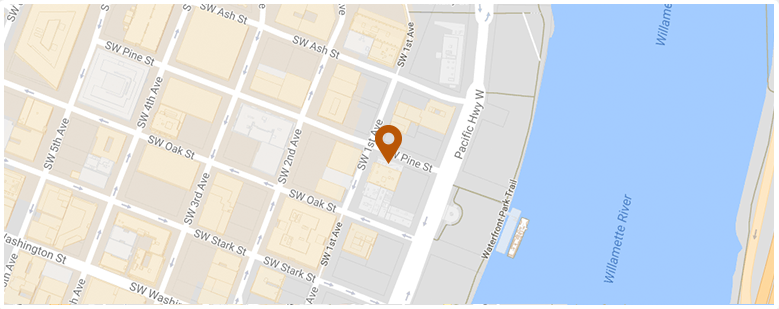
50 SW Pine St 3rd Floor Portland, OR 97204 Telephone: (503) 226-3844 Fax: (503) 943-6670 Email: matthew@mdkaplanlaw.com
map image